
5 Questions with Astrid Rosetti, Art Advisor and Market Strategist
Apr 9, 2026
Meet Astrid Rosetti, the woman who knows exactly what’s happening behind the velvet ropes of the global art market.
Part high-stakes advisor and part strategic operator, Astrid works across collection building, private art investment structures, and institutional and corporate projects, while also teaching at Sotheby’s Institute of Art.
With over a decade of experience navigating the complexities of the global art market, she’s the perfect person who’s brain to pick on the long game; global opportunity; slow art; and the future priorities of collectors and advisors. Here's what Astrid had to say.
1AN: When you founded Rosetti Firmenich Art Advisory, what gaps were you seeing in the market that collectors weren’t being adequately served by?
Astrid Rosetti: I was struck by how little truly independent advice existed in a market where significant financial and cultural decisions are made every day. Information circulates within closed networks, often benefiting those already inside the system, while collectors are expected to navigate complexity with limited transparency.
What still surprises me most is how casually advice is treated in art. People will conduct extensive due diligence when buying property or financial assets, yet routinely make six- or seven-figure art acquisitions without independent guidance. Buying art is easy, and anyone can spend money. Selling it, managing it, or building a coherent collection over time without losses or reputational risk is where it becomes far more complex.
Art advising is not about taste. It is about navigating pricing asymmetries, conflicts of interest, liquidity, and timing. I wanted to create a structure where advice is impartial, strategic, and grounded in trust while also having the freedom to choose the clients and projects I work with.
 1AN: That makes sense. Clearly, there's so much to consider. So, when assessing long-term relevance, what signals or indicators do you believe serious collectors should be paying closer attention to right now?
Astrid Rosetti: What has shifted most is the level of awareness among collectors particularly the next generation. They are informed, intentional, and far less interested in being told what matters. The role today is not to “educate,” but to challenge, refine, and position decisions within a broader, long-term context.
For more established collectors, the focus has moved toward precision. It is no longer about access to the market, but access to the right works often off-market, correctly priced, and acquired with discipline. That requires relationships, timing, and a clear understanding of where real value sits.
At the same time, not everything should be over-strategised. With emerging artists, the logic is often simpler: buy the work if you genuinely connect with it. Follow the artist, support the trajectory, and accept that not everything needs to be optimised financially.
The most common mistake remains the same, confusing visibility with value. Long-term relevance is rarely built on consensus; it is built on conviction, consistency, and context.
1AN: As the art market becomes increasingly global, how should collectors rethink geography, access, and where opportunity truly lies?
Astrid Rosetti: The market has globalised, but what we are seeing now is a correction. For years, the system was becoming increasingly homogenised with the same artists, the same conversations, the same acquisitions circulating between New York, London, Hong Kong, and beyond. You could travel across continents and encounter essentially the same market. That model is losing momentum.
Collectors are now building more complex, individual collections, and moving across geographies, categories, and narratives with far greater independence. I would not advise a client to buy the same type of work in London, Shanghai, and São Paulo simply because it is visible everywhere. That is not strategy. That is repetition.
Opportunity today lies in context: understanding regional ecosystems, local dynamics, and under-recognized practices that sit outside the dominant circuits. The assumption that value is concentrated in a handful of global centres is being challenged and rightly so.
1AN: Interesting, but in a market often driven by speed, hype, and visibility, how do you encourage clients to slow down and collect with intention?
Astrid Rosetti: The market has already slowed and that is a necessary correction. We are seeing a shift from reactive buying to more deliberate, informed decision-making.
At the same time, platforms like Instagram have fundamentally changed how collectors discover and engage with artists. That is a positive shift. It has created a more direct, immediate relationship between artists and collectors, which did not exist in the same way before.
The issue is not access, it is interpretation. Constant visibility creates the illusion that opportunities are always disappearing, which can lead to rushed decisions. Strong collections are not built through urgency.
There is no substitute for time and exposure: seeing works in person, speaking with artists, understanding gallery dynamics, and developing a clear framework for decision-making. Yes, it is demanding. But without that, mistakes are inevitable
I often say to my clients and students: buying art is easy. Buying it for the right reasons, at the right moment, with a clear understanding of what you are engaging with, is where the work begins.

1AN: Looking ahead, how do you see sustainability, responsibility, and cultural stewardship reshaping the future priorities of collectors and advisors alike?
Astrid Rosetti: What is shifting is less about sustainability as a concept, and more about responsibility in practice - how collectors engage with artists, institutions, and the broader ecosystem.
Art still carries the perception of being reserved for a narrow, privileged group. That is both inaccurate and ultimately limiting for the market itself. You can build a serious, thoughtful collection without operating at the highest price levels. Expanding access, intellectually and financially, is essential if the ecosystem is to remain relevant.
At the same time, collectors are becoming more aware of their role beyond acquisition: supporting artists over time, engaging with institutions, and thinking about legacy in cultural, not just financial, terms.
For advisors, this raises the bar. The role is no longer to facilitate transactions. It is to provide structure, clarity, and context in a market that often lacks all three, and to ensure that collecting is approached with intention, not just capital.
Connect with Astrid here.
Recommended articles



Author

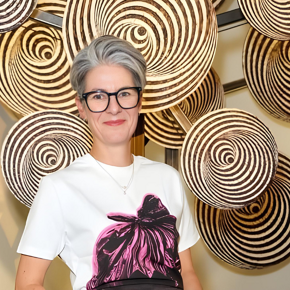
Astrid Rosetti
Astrid Rosetti is an art advisor and market strategist, and the founder of Rosetti Firmenich Art Advisory (RFAA), an independent firm operating between London and Geneva. She advises private collectors, family offices, corporations and institutions on acquisitions, valuation, due diligence, and long-term collection strategy, with a focus on post-war and contemporary art.
With...
Recommended Videos

Charlie Manzo, Alaina Simone, Muys Snijders, Kyle McGrath, Caren Petersen, Jason Rulnick, Elysian McNiff Koglmeier, Bianca Cutait, Linda Mariano, Jack Mur






Steven R. Schindler, Katherine Wilson-Milne, Jacqueline Towers-Perkins, Roxanne Cohen, Alanna Butera, Annelien Bruins



Steven R. Schindler, Katherine Wilson-Milne, Jacqueline Towers-Perkins, Annelien Bruins, Mary Buschman, Heidi Lee-Komaromi, Drew Watson