The Art Lawyer's Diary© by Barbara Hoffman: Venice Biennale 2026 - Babel, Listening, and the End of Cultural Consensus
May 18, 2026
From Spectacle to the Tower of Babel
For years, critics have described the Venice Biennale through the familiar vocabulary of “spectacle”, coined by the French philosopher Guy Debord, in his classic 1967 book, The Society of Spectacle. “Everything that was directly lived,” Debord famously wrote, “has moved away into a representation”.
The contemporary art world has in many ways fulfilled Debord’s diagnosis. Global exhibitions now operate within economies of circulation in which visibility itself becomes a form of power. Artworks function not only as aesthetic objects but as images optimized for institutional branding, market attention, and social media dissemination. Spectacle becomes not simply style, but structure.
The word became shorthand for everything associated with the contemporary art world at its most excessive: global collectors descending on Venice by yacht and water taxi, luxury conglomerates underwriting institutional culture, curators producing increasingly monumental installations, and national pavilions competing for geopolitical relevance through architecture, scale, and visibility, at times celebrating universal ideals while simultaneously reinforcing geopolitical hierarchies and Western cultural authority. Experiential environments, and instantly circulating imagery have transformed many exhibitions into engines of cultural consumption designed as much for digital reproduction as for sustained contemplation. The viewer often encounters art not through duration or reflection, but through immediacy and visual impact. See New York Times.
Yet navigating Venice’s art ecosystem from patronage to pavilions to palazzi and collateral events, during the 2026 Biennale preview days May 6-9, I increasingly felt that, notwithstanding the ever-increasing extravaganza of exhibitions, events, foundations, museums and symbols of power, spectacle no longer fully explained what was unfolding before me.
Venice and the 61st Venice Biennale exist not as an island, but mirror of contemporary world chaos and the crumbling of the international post-World War II order. Since its inception, the Biennale has operated under the idealist premise that contemporary art functions as a universal language capable of transcending national borders, ideological divides, and regulatory variances.
However, as an art lawyer practicing within this ecosystem today, at the intersection of art, law, culture and power, the reality reveals a starkly different hierarchy. Narratives that once organized political and cultural life now appear fractured under the pressures of war, migration, decolonization, ecological crisis, technological acceleration, and growing distrust of centralized authority.
For me this was one of the most emotionally charged, intellectually fuelled and politically influenced Biennale preview weeks, I have experienced in my years of attending the Biennale d’arte since 1984.
In Minor Keys, the curated exhibition of the 61st Biennale, by the late Koyo Kouoh is a memorial to Koyo Kouoh’s vision: … “Grounded in a deep belief of artists as the vital interpreters of the social and psychic condition and catalyst of new relations and possibilities… this biennale proposes a radical reconnection with art’s natural habitat and role in society: that is the emotional, the visual, the sensory, the effective, the subjective.” For Kouoh, the enduring time of capital and empire which maligned local and indigenous knowledge as chimeric constitutive artistic practices as craft for decoration, is to be replaced: “the time has come to listen to the minor keys.”
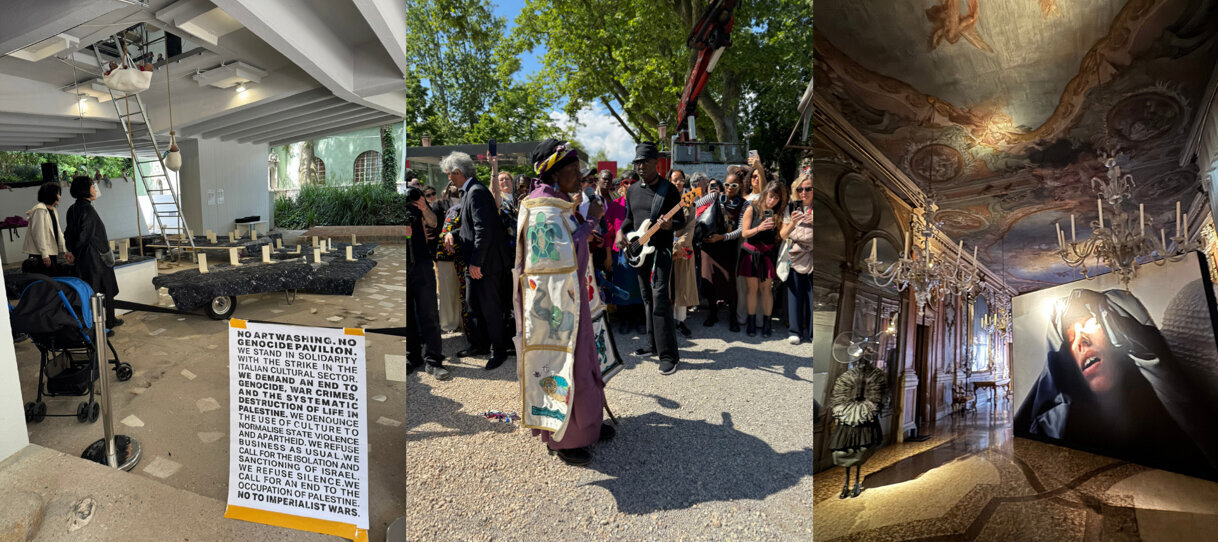
During the preview week, Venice became an acoustic chamber of competing voices. Curators spoke the language of decolonization, archives as repair erased histories and the psychological and cultural impact that arises when one’s lived reality is persistently contradicted by dominant narratives—the quiet dissonance of existing at the margins of a story that was never written for you. Collectors discussed institutional validation, market placement and changing trends in art world taste. Political activists challenged museum complicity, geopolitical silence, and donor ethics, as diplomats framed national pavilions as exercises in cultural sovereignty and were forced to make difficult political decisions regarding the participation of Russia and Israel in the Biennale.
Perhaps most interesting is the blur between commerce, brand and art patronage. Luxury brands pursued cultural legitimacy through sponsorships, dinners, and foundations, in ever increasing numbers.
I am not alone in recognizing the changed atmosphere and forceful new currents: James Haldane comments in Sotheby’s Magazine, May 15, “the Biennale feels less like an exhibition than a tuning fork that reverberates through national pavilions, libraries, palazzi and newly claimed interstitial spaces. The 2026 edition is loud, politically charged and sometimes deliberately provocative. But beneath the surface noise, a quieter recalibration is under way, one concerned less with urgency than with duration.”
Yet, if there is a shared vision of underlying and powerful currents which predict a sea change or tipping point, the nature of this current and its direction or whether to go with the flow or resist, depends on world view and an ability to listen, translate and pay attention to the signs. Visitors during the preview week traverse the same canals and streets of Venice, visit the same sites and exhibitions and attend some of the same parties and dinners, while speaking different moral and institutional languages and inhabiting different perceived realities.
For example, from Sotheby’s market perspective, “One of the most telling shifts comes not from an artist but from a patron. Bulgari or rather its foundation created in 2024, has entered into an exclusive partnership with the International Art Exhibition of La Biennale di Venezia… Stretching through to 2030, this is not a sponsorship that borrows the Biennale’s cultural capital for a season, but a commitment to its long-term ecology.
The motto they have adopted—'Freedom Creates’ echoes the broader cultural position articulated by Bulgari CEO JeanChristophe Babin in the Biennale’s opening press conference. “Jewelry,” Babin noted, “sits closer to architecture than fashion in its relationship to time—objects made to last for decades, for centuries and more.” Art, in this view, is not “an embellishment but a fundamental human practice. Art is really the ultimate expression of the human being,” Babin said. “A lot of things can be done by artificial intelligence. But art can only be done by men and women.”
In Minor Keys intentionally resists the traditional framework of spectacle. The 2026 Venice Biennale is better understood not through Debord’s notion of spectacle but through the biblical model of the Tower of Babel. The Tower of Babel (Genesis 11:1–9) is a narrative where God fractured a single human language into many and scattered mankind to halt the arrogant construction of a tower intended to reach the heavens.
The story has long served as a metaphor for failed universalism, fractured communication, competing systems of meaning, and the collapse of shared authority The contemporary model derived from the biblical reference is not the Tower Babel enterprise as mere chaos but Babel as the collapse of universal meaning: fragmented languages, competing moral systems, legal and jurisdictional regimes and institutional incoherence operating simultaneously within a shared symbolic space while increasingly failing to speak to one another.
Echoing the theme of In Minor Keys, Pietrangelo Buttafuoco, President of the Biennale de Venezia observed in the Forward of the catalog, “As the world cries out and voices are distorted in the din – to the point of all meaning being obscured – there remains only one way to communicate by creating a listening zone toned in to a lower frequency. More intimate, welcoming, human but no less charismatic.”
The term Minor Keys acknowledges an architecture of power. It accepts the fragmentation of language that is Babel. Rather than overwhelming the viewer through monumentality or theatricality, the exhibition privileges restraint, intimacy, fragmentation, and relation. It moves through quieter gestures and partial narratives rather than grand declarations. Works unfold through memory, interruption, displacement, and layered histories. In Minor Keys resists singular interpretation to create a constellation of voices that coexist without collapsing into one authoritative narrative.
A New Vision for Being Present in the Future
“In the Great Circle everything is in everything else” Edouard Glissant 1993
The Biennale neither attempts to restore a lost universal order nor retreats into isolated identity positions. Instead, it offers a model of coexistence grounded in plurality itself. In this sense, In Minor Keys can be understood through the metaphor of the Tower of Babel, not as catastrophe, but as possibility for a vision of the future in which multiple voices, histories and narratives can coexist. As Kouoh states, “The’ civilizing mission’ flattens with condescending contempt… The time has come to listen to the minor keys. whisperers… to find the oases, the islands, where the dignity of all living beings is safe guarded.”
Modern institutions — museums, encyclopedic exhibitions, even art history itself — were in many ways attempts to reverse Babel by constructing systems capable of translating the world into one coherent narrative. Jason Farago’s article, The Passion for Life and the Ghost of Art, in the May 15, New York Times laments what he perceives as the disappearance of artistic greatness, formal power, and visual conviction from the curated exhibition In Minor Keys. In its place, he finds fragmentation, restraint, intimacy, and what he regards as a retreat from ambition. His praise for Nancy Spector’s Helter Skelter, at Fondazione Prada as Venice’s most compelling exhibition is revealing precisely because he uses it to underscore the divide at the center of contemporary art discourse: whether art should continue to pursue the logic of modernity or whether it must now imagine another model for the artist and art in a fragmented and chaotic world.
Venice 2026 also confirms what has become increasingly obvious over the past several years, that not only is the Biennale the most important international art exhibition; but also that Venice is a center of the global international art world. As a corollary, the non-biennale collateral exhibitions were more compelling than the national pavilions and in the view of some critics, the curating of the Central Pavilion and Giardini. Venice 2026 raises the complex question of the role of the Biennale of Arte as the most important contemporary art exhibition in a fragmented world.
A Brief Guide to the Art of the Matter from An Art Lawyer Perspective
As you readers are aware, I write at the intersection of art, law, culture and politics. While I do have a rather strong track record in selecting the best pavilions, (at least based on the jury selection that previously existed before the en masse resignation of the 2026 jury to protest the administration of the Biennale’s decision to permit the participation of national pavilions of Israel and Russia), others more qualified than myself have created more than adequate guides for the Biennale. See the Short Guide Biennale Arte 2026.
Let the journey begin:
Poets Caravan by Maria Magdalena Campos-Pon
Maria Magdalena Campos-Pons opens the exhibition with a procession of poets in the Gardini, calling back to Koyo’s Poetry Caravan, from Dakar to Timbuktu, with nine African poets in 1999.
In Minor Keys Curated by Koyo Kouoh: The Central Pavilion
[Take a deep breath]
[Exhale]
[Drop your shoulders]
[Close your eyes]
“This is an invitation to encounter these words in the immediate physical, meteorological, ambient, and karmic conditions in which they meet you. To shift to a slower gear and tune in to the frequencies of the minor keys. Because, though often lost in the anxious cacophony of the present chaos raging through the world, the music continues. The songs of those producing beauty in spite of tragedy, the tunes of the fugitives recovering from the ruins, the harmonies of those repairing wounds and worlds.”
There is a reason, after all, that some people wish to the moon, and others dance before it as an ancient friend.
James Baldwin, 1972
Werewere Liking
“D’ascendance Pan-African” 2023
New York Times: The Sights of the Venice Biennale
The Arsenale
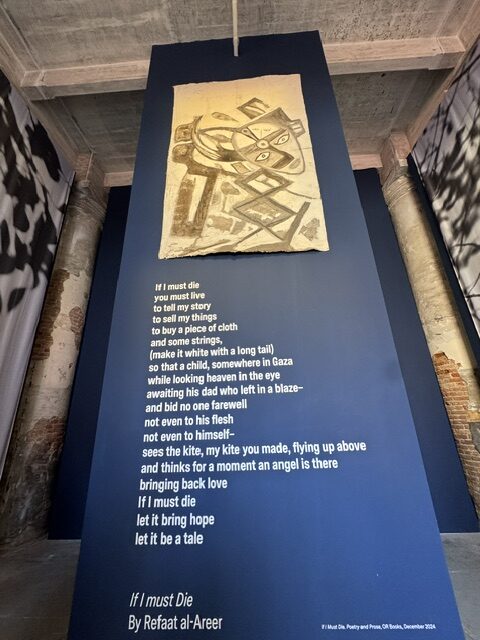
Floating above the poem of a Palestinian poet who died in Gaza after October 7th, is a painting by the late Senegalese artist, Issa Samb. According to the wall text, “the painting reflects Samb’s philosophical interest in existence beyond the divide between life and death. This pairs directly with the posthumous theme of Alareer’s poem, which focuses on mourning loss while maintaining that life must continue afterward.”
Biennale's Artists in The Arsenal
A consistent theme of Biennale’s artists is the erasure of histories from official archives and the use of family archives and oral histories to recreate a true narrative. Tuan Andrew Nguyen, a Vietnamese artist’s method is bringing out individual histories . He became interested in the experience of Senegalese soldiers deployed into Indo-China by the French colonial when they returned to Senegal. Nguyen became aware of one of these descendants “Buba S,” a longtime robber and working class folk-hero. "The film shows the difficulties of survival of the mixed race descendant and how imagination and creativity create an anchor."
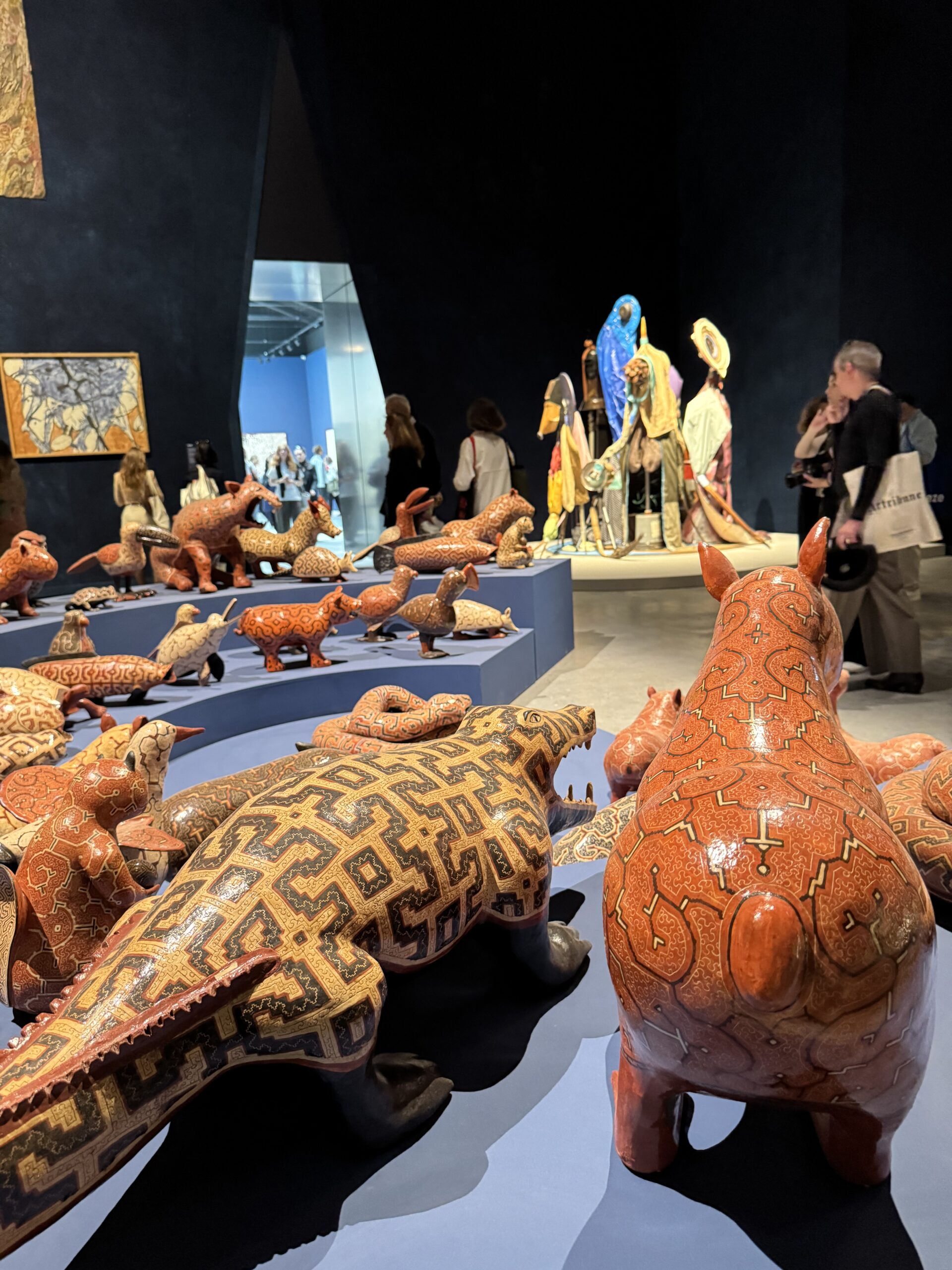
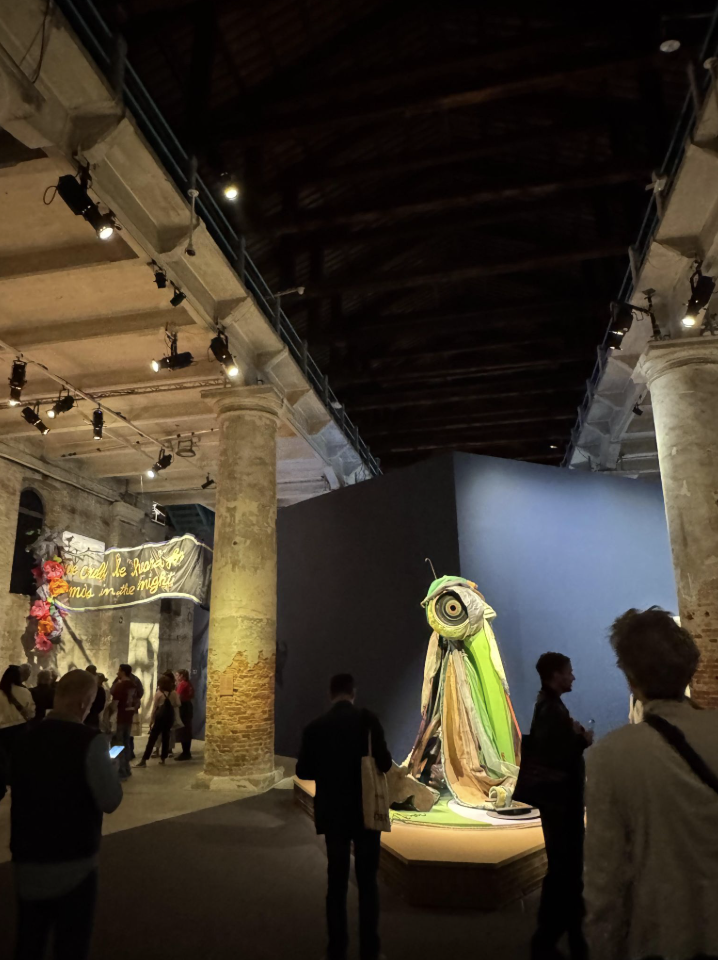
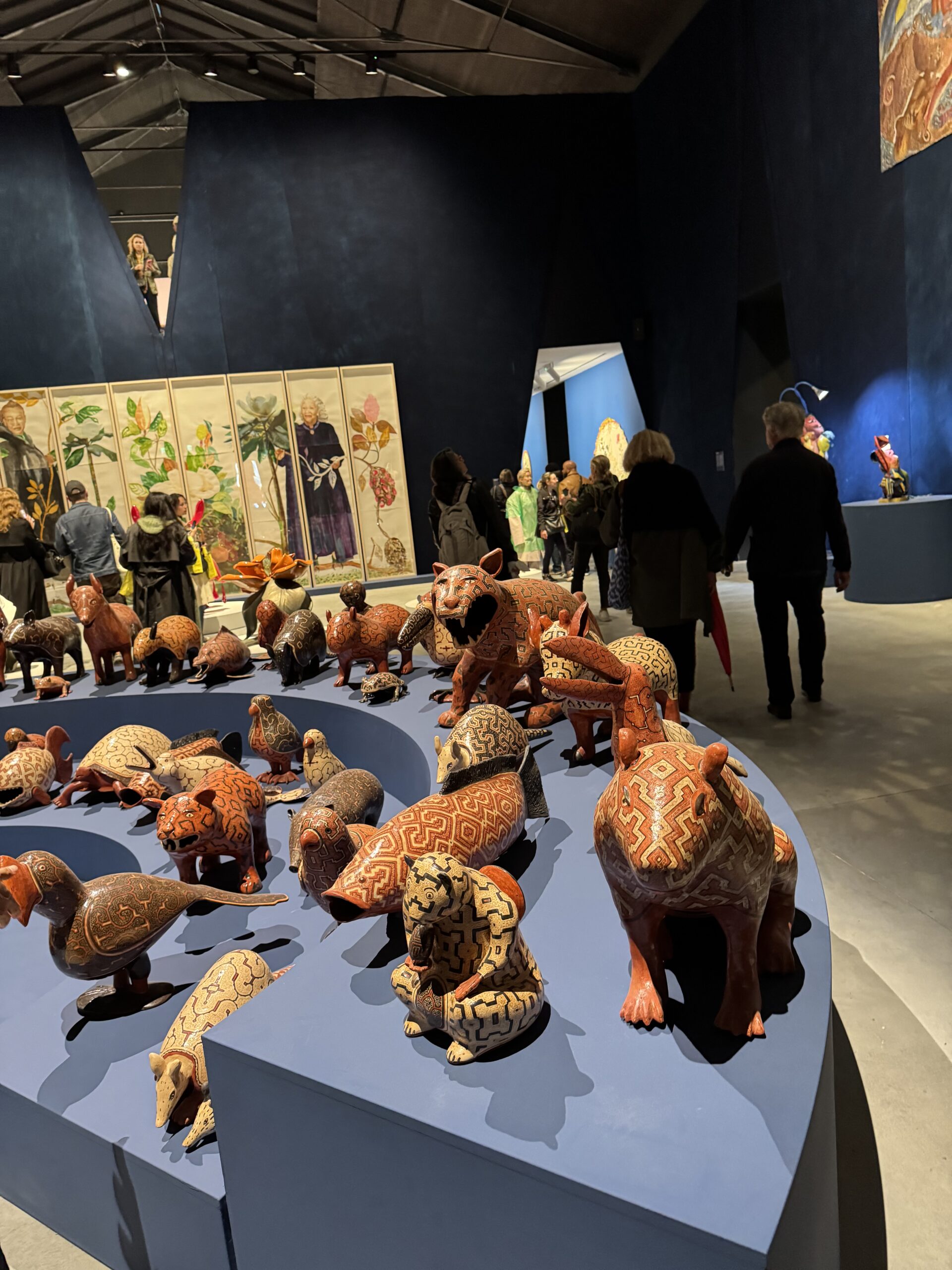
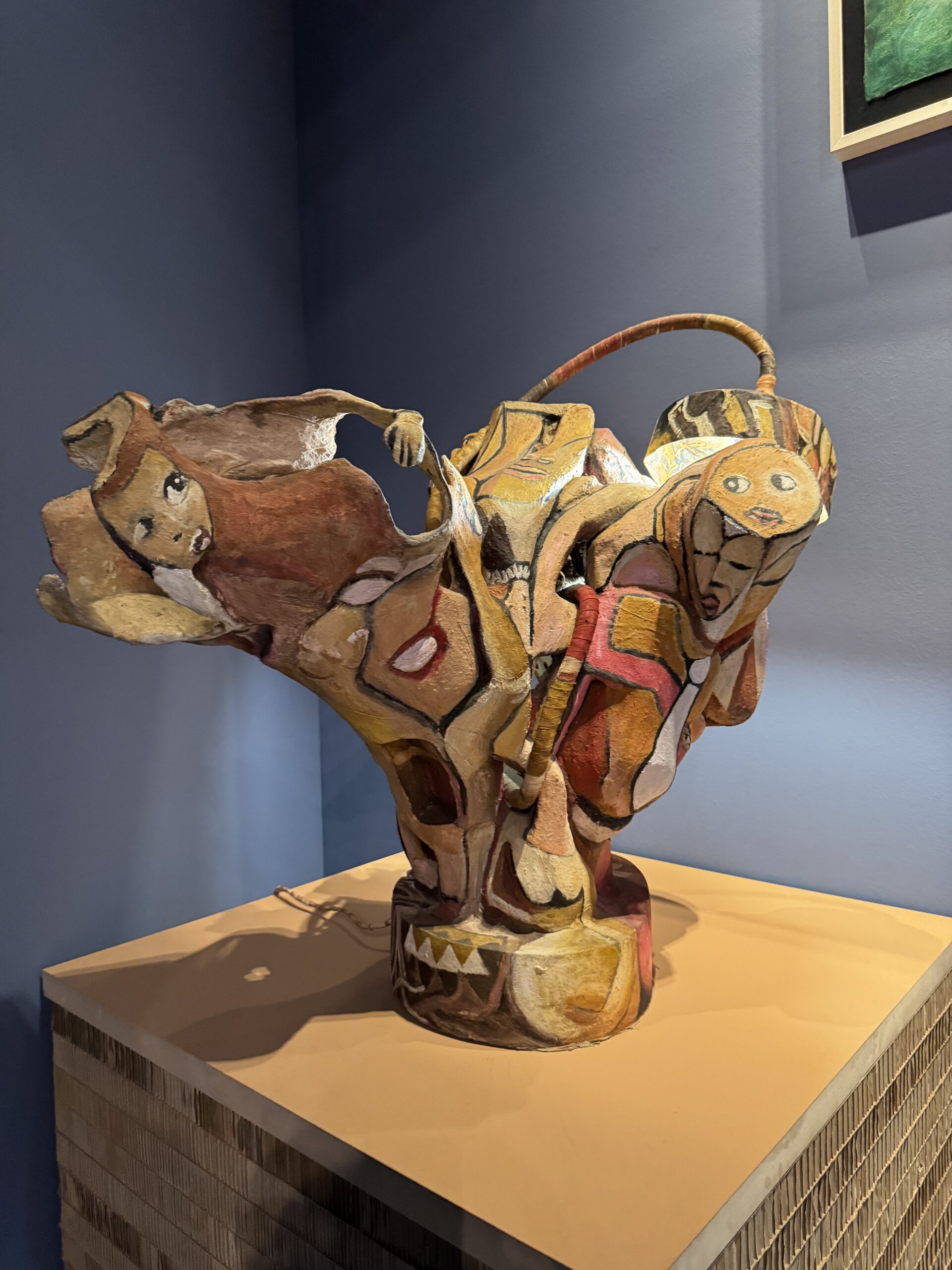
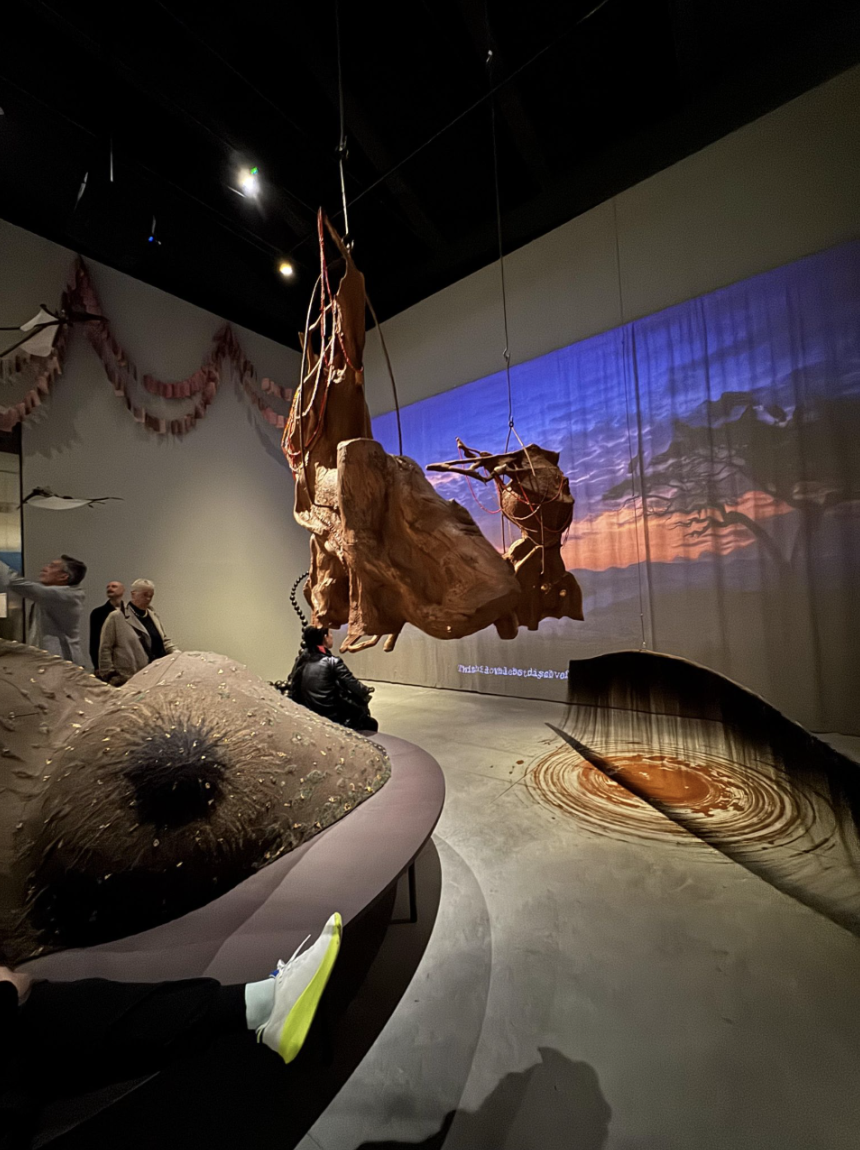
Images of In Minor Keys, appears below.
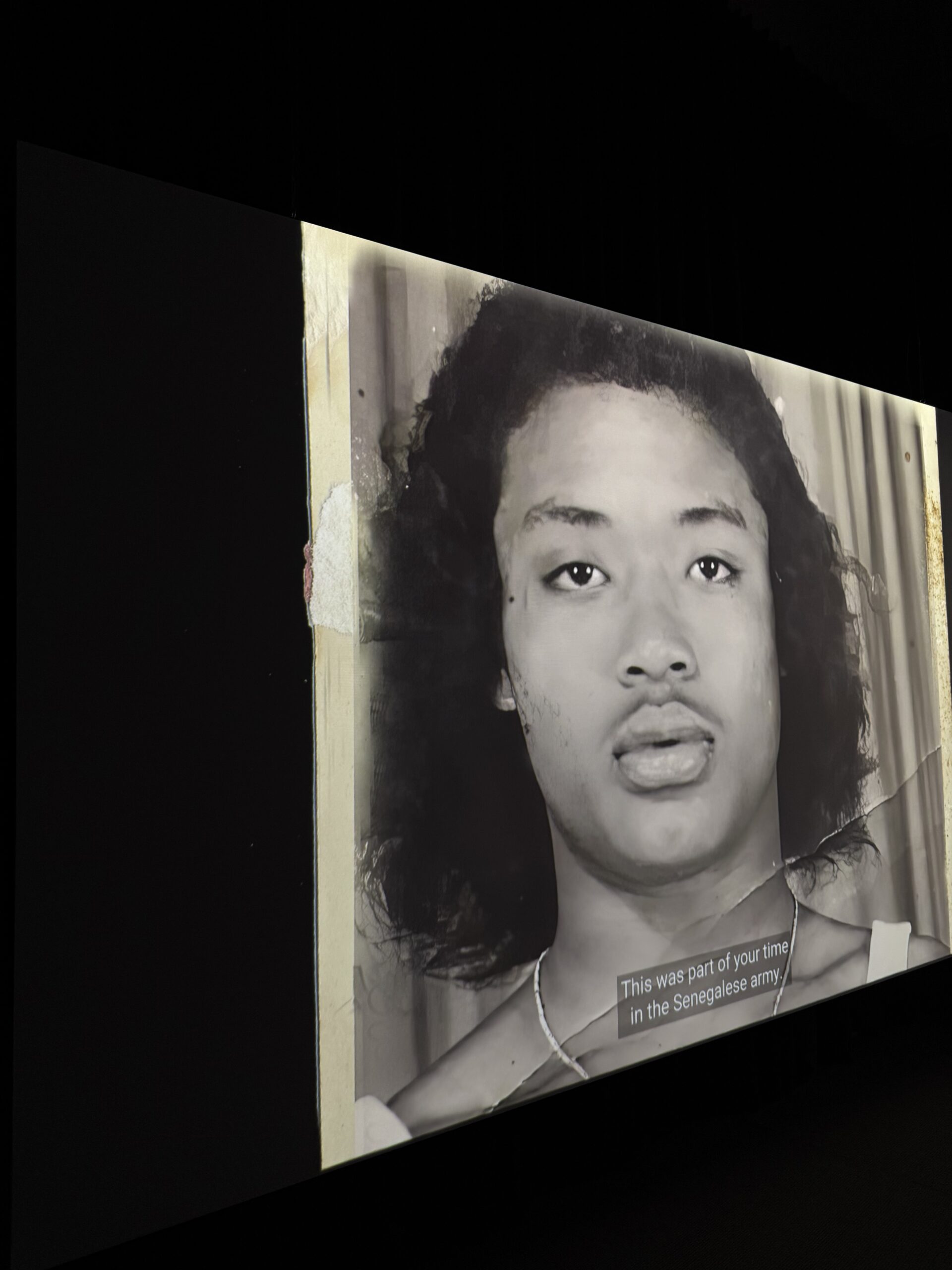
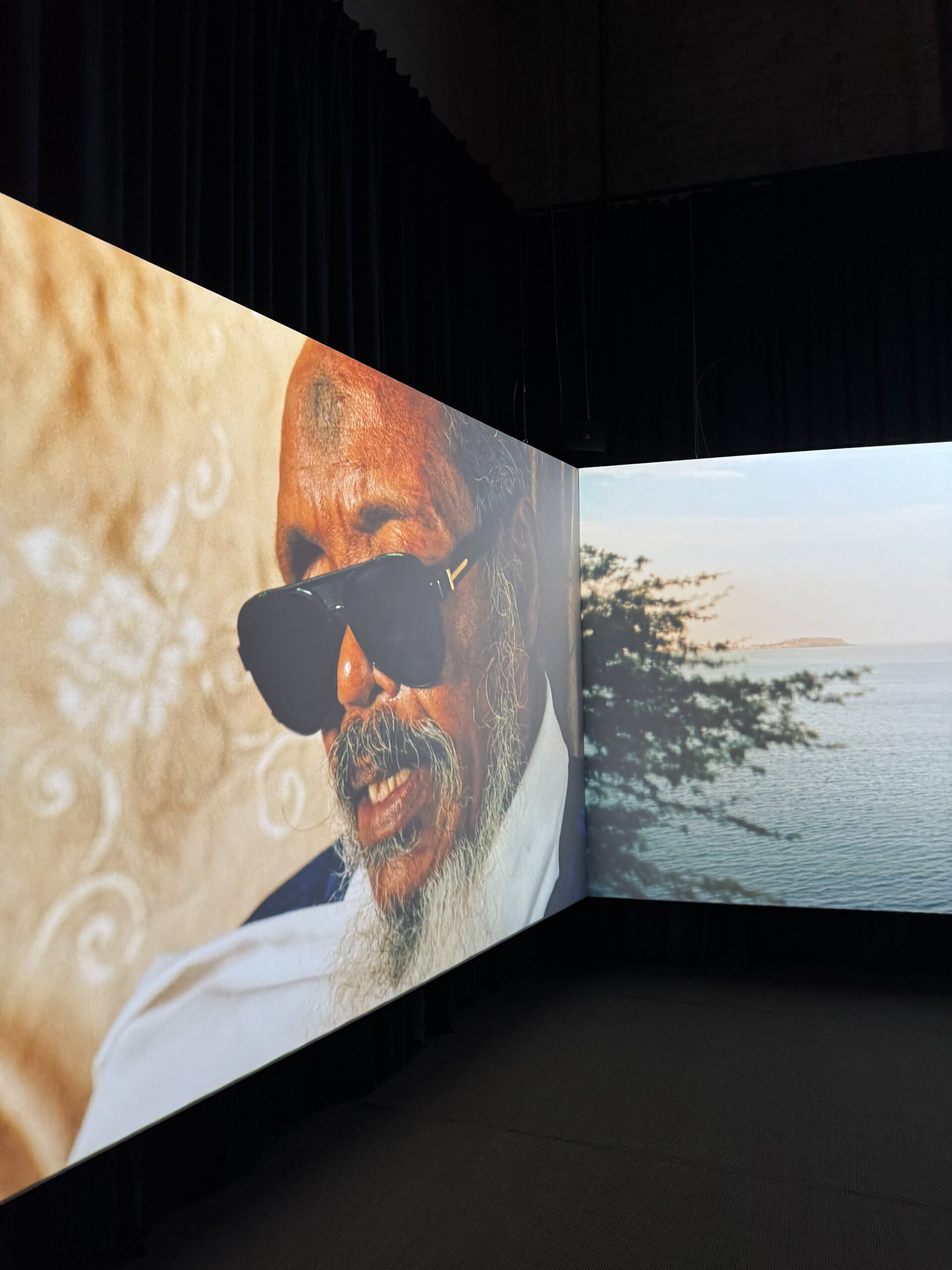
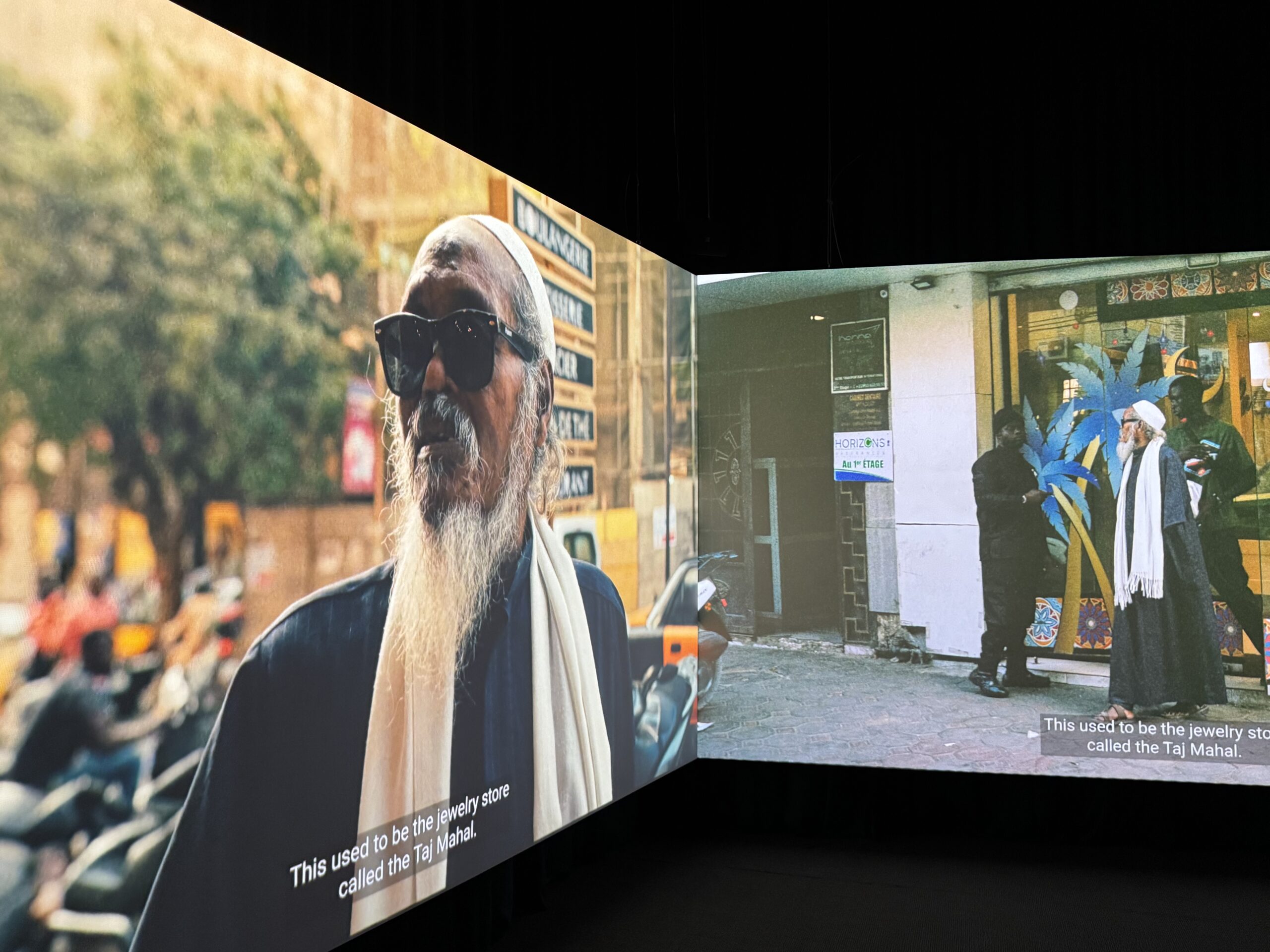
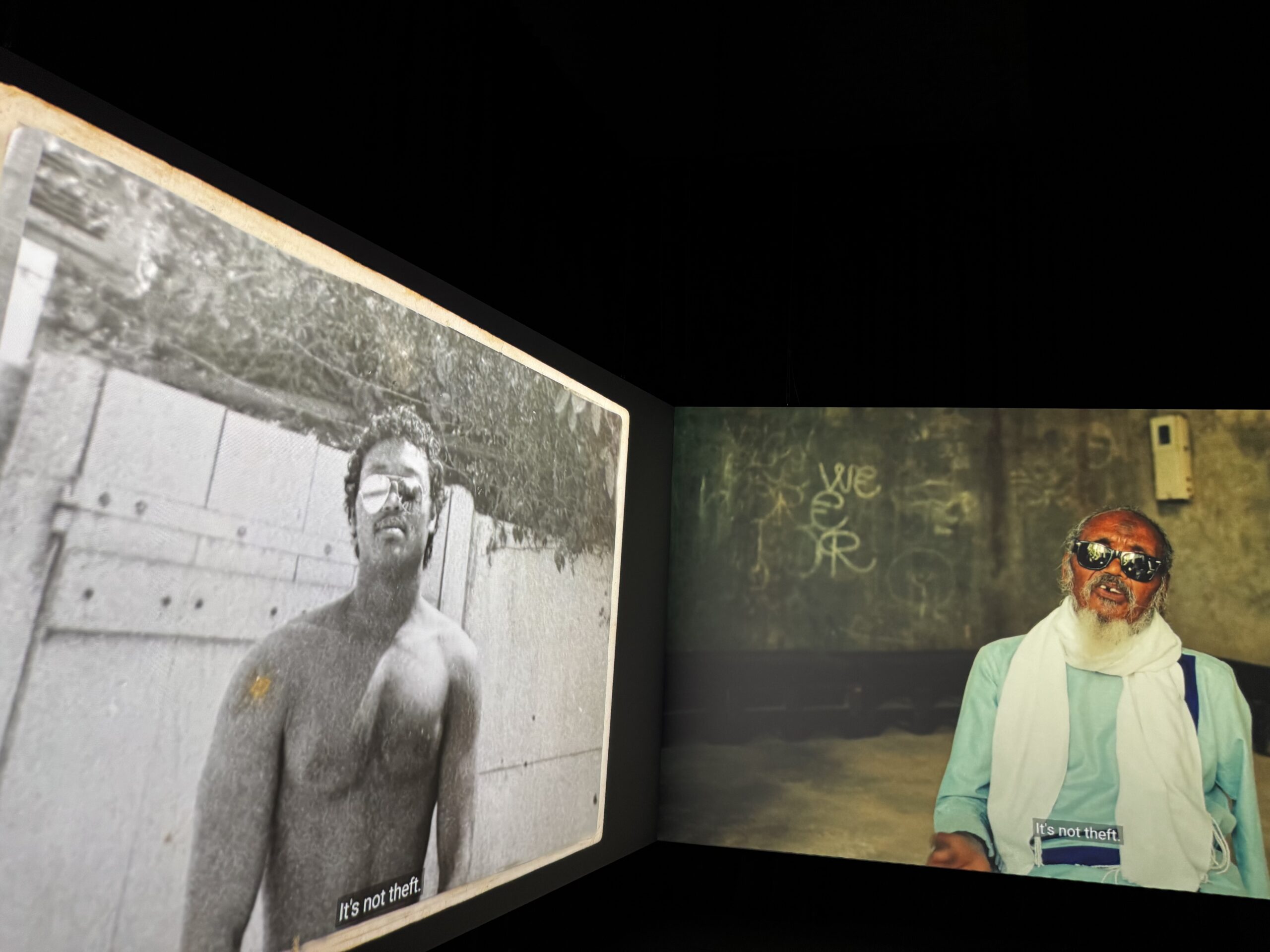
An important section of In Minor Keys, deals with schools and artist collectives, as an essential part of the art ecosystem, and the necessary role of artists in community building and practice. blaxTarlines Kumasi calls itself an art labor movement.
“Nguyen, a Vietnamese artist became interested in the experience of Senegalese soilders deployed into China by the French colonial army, and the wives in - and returned with them to Senegal. Nguyen became aware of one of these descendants “Buba S.” A long time robber and working-class folk-hero reputation.”
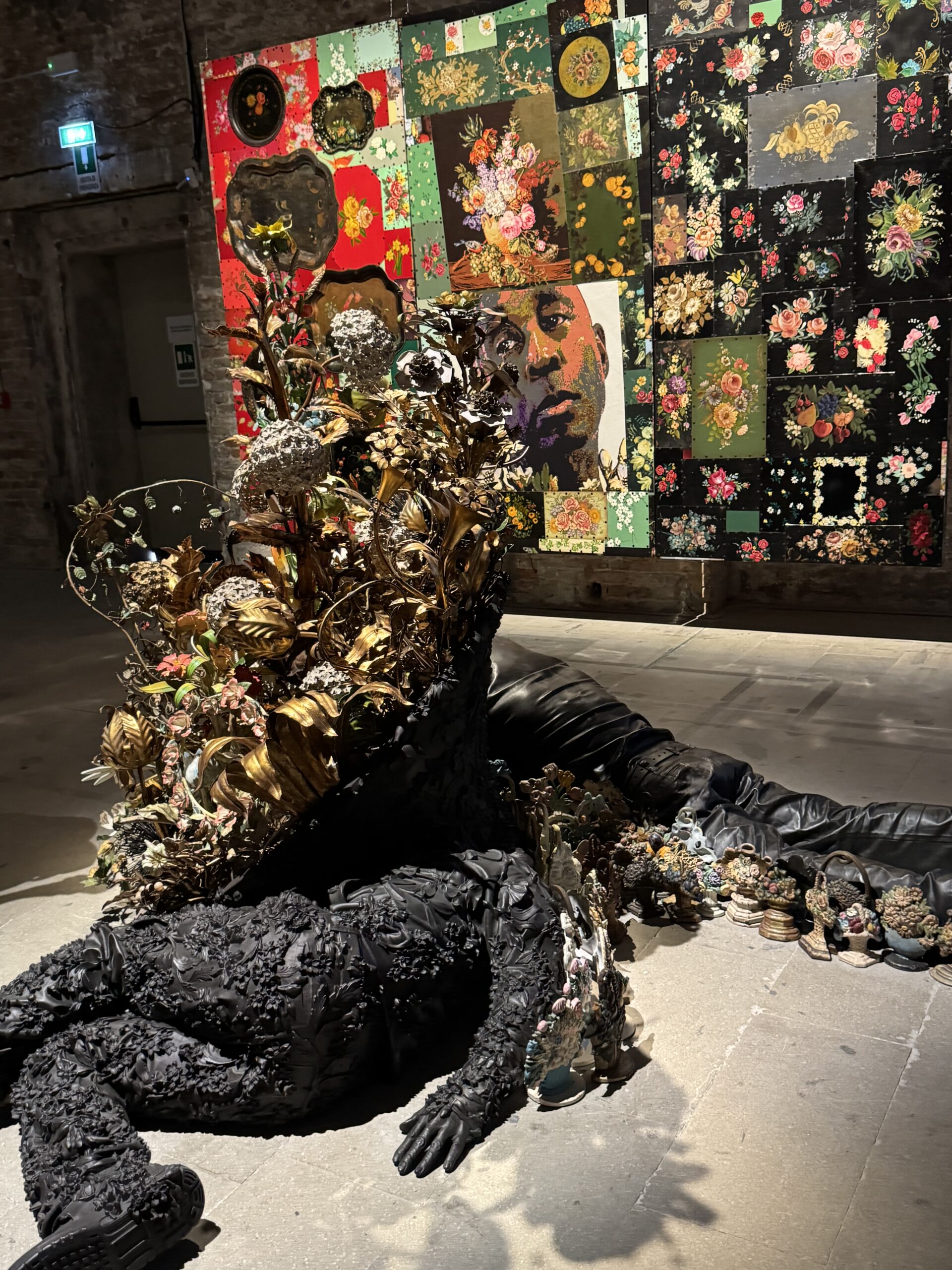
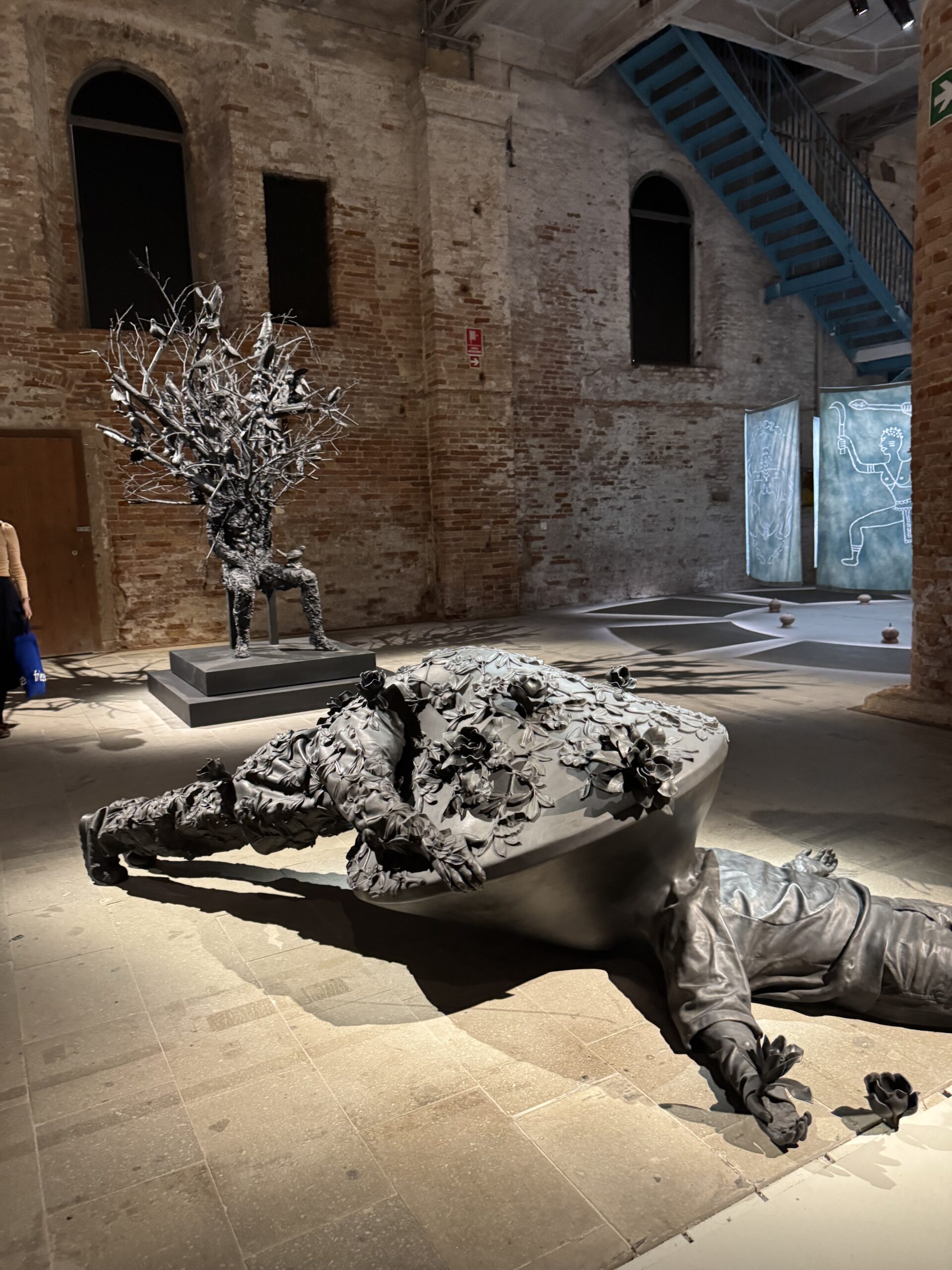
Nick Cave, an artist known for his exuberant wearable sculptures is in dialogue with the rituals, carnival, masks and procession envisioned as a theme of this biennale and seen in the work of artists like Big Chief Demond Melancon.
National Pavilions at the Giardini
The national pavilions themselves increasingly expose the instability of the international exhibition model. The Israeli Pavilion became a site of intense political protest and moral disagreement. The U.S. Pavilion, represented by Alma Allen after controversy surrounding an earlier proposal, revealed tensions involving donor influence, governance structures, and the politics of cultural representation abroad.
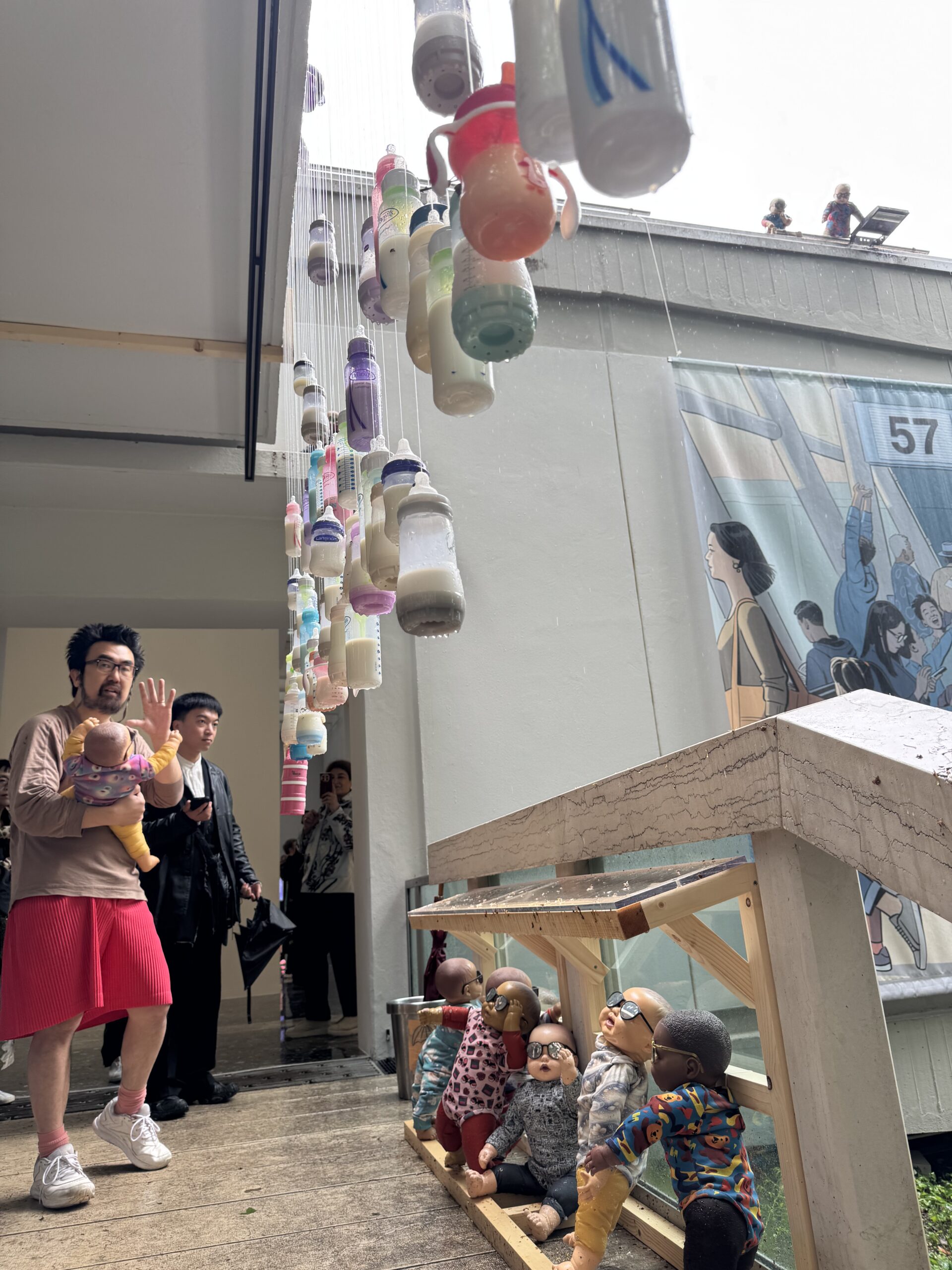
Most pavilions express one or more facets of the philosophy and themes of In Minor Keys. In The Japanese Pavillion, Ei Arakawa Nash’s Grass Babies, Moon Babies emerges from the artist becoming a queer artist parent of twins, merging child caring with his art practice: artist as a father of his baby twins and echoes the Biennale’s themes of pause, and family and daily life experience Ei Arakawa- Nash says, “Care is a social and political structure… I am hoping to create a platform where people can engage with care collectively.”
In The French Pavillion, Comme Saturne, Yto Barrada deals with the long history of textile work, globalization and extraction.
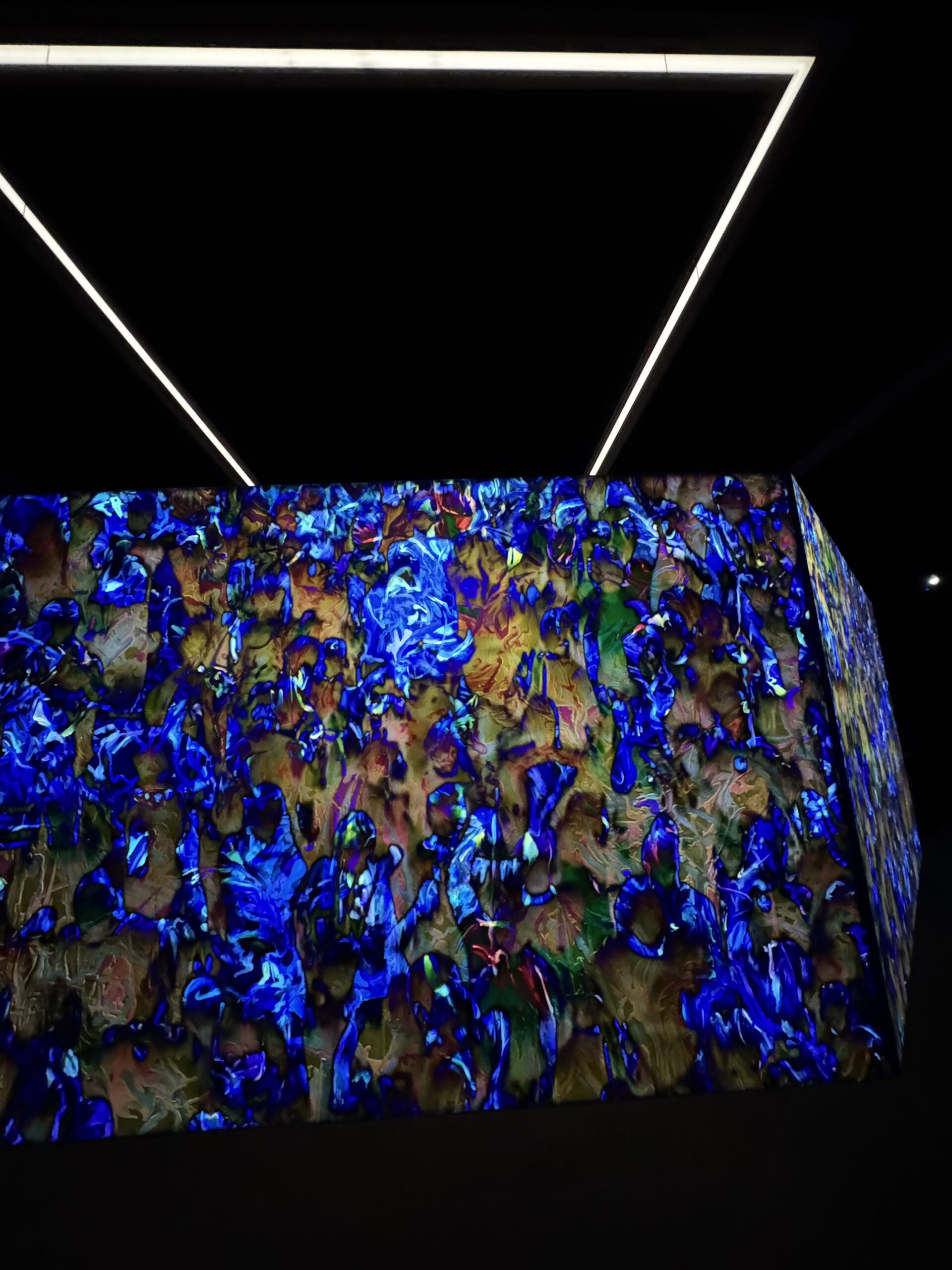
Khaled Sabsadi is in the Australian Pavilion conference of oneself and the Arsenale. His installations resonant with the theme and philosophy of In Minor Keys. Based on Sufi thought and twelfth century Sufi poem, The Conference of the Birds. Sabsabi says conference of oneself is an altered state of consciousness searching physically for the innermost part of the heart in which discovery and realization may be experienced. The sound within the work draws from the ancient act of rhythmic percussion, a universal language present since the beginning and unbound from a singular civilization language faith or place.
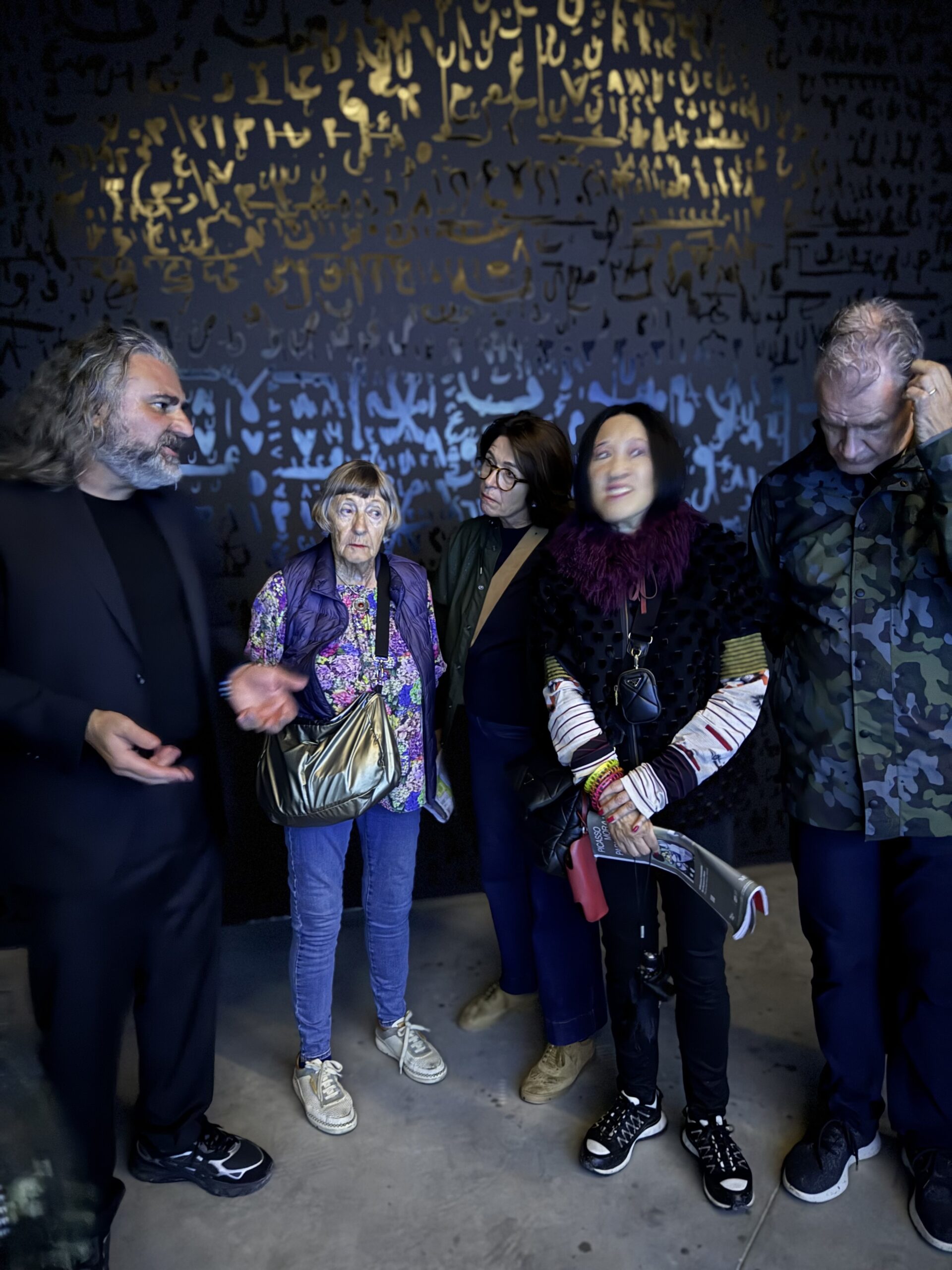
A Day of Strike of Behalf of Palestine
“... The destruction of Palestine is the destruction of the world.” Poster at the Japanese Pavilion
A word that has dominated media discourse to describe events since 2025 is “unprecedented”. The 61st Venice Biennale (May 9 – November 22, 2026) is defined by unprecedented events: geopolitical events including a strike in support of Palestine of more than 1000 people on Via Garibaldi and closure for 24 hours of at least 25 national pavilion in support, demonstrations and performances by Ukraine supporters at the pavilion of Russia and structural disruptions in the governance of the Italian administration, including the resignation of the jury for the coveted Lion awards, and an emergency decision to entrust the decision to public vote.
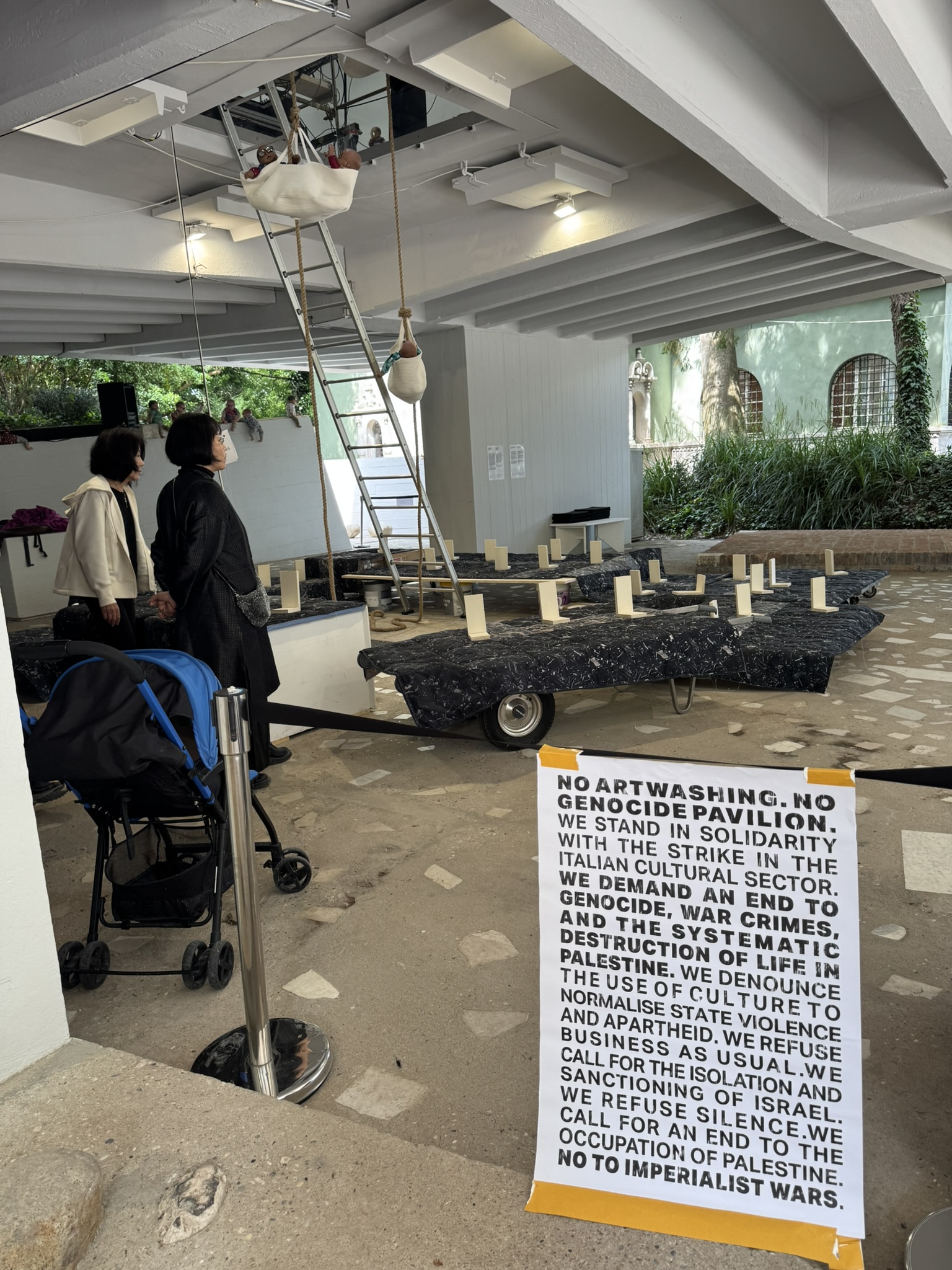
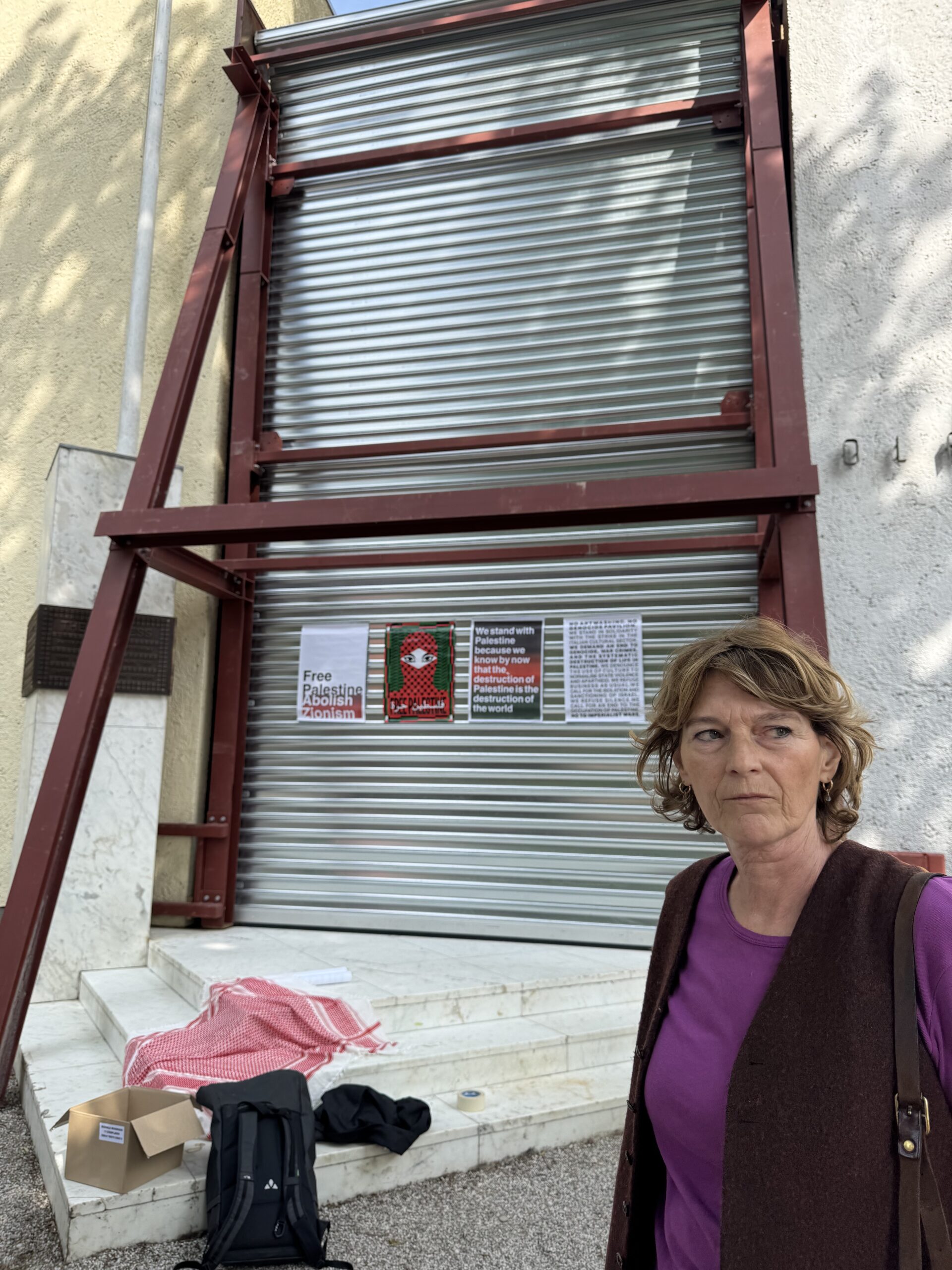
Follow @Angalliance for more information on the strike.
Resistance Has Many Forms and Voices
Kouoh proposes an ethics of listening within fragmentation itself. The Holy See Pavilion became especially important through this lens. Titled “The Ear is the Eye of the Soul”, the Vatican’s presentation curated by ever present Hans Ulrich Obrist has transformed sound and contemplation into forms of ethical attention. In a Biennale overwhelmed by competing voices, the Pavilion suggested that the crisis of contemporary culture may not be the absence of speech but the disappearance of meaningful listening. In the Giardiono Mistico, listening becomes centrale. It's across from the side of the train station and has high marks with a sound track including Patti Smith.
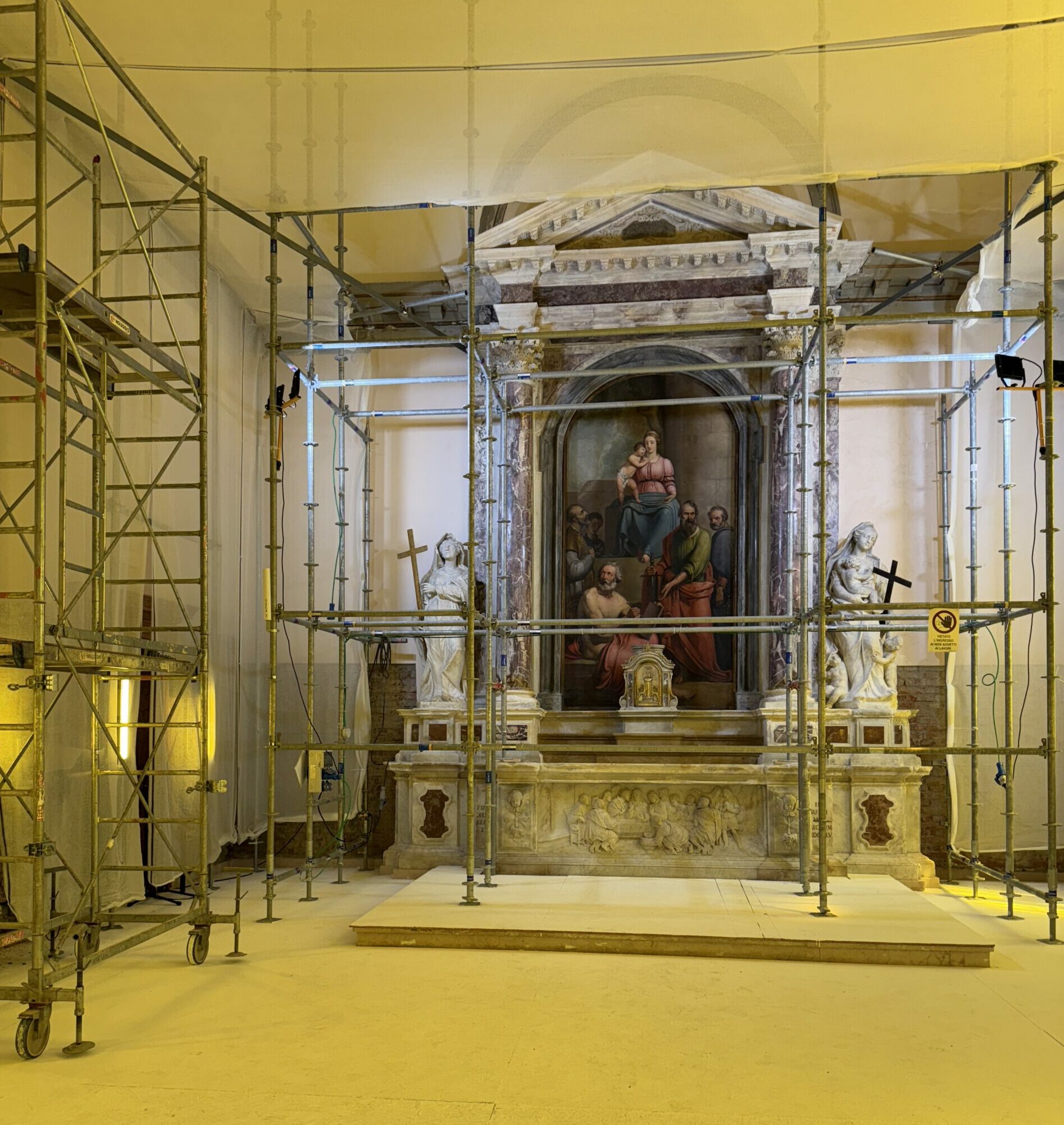
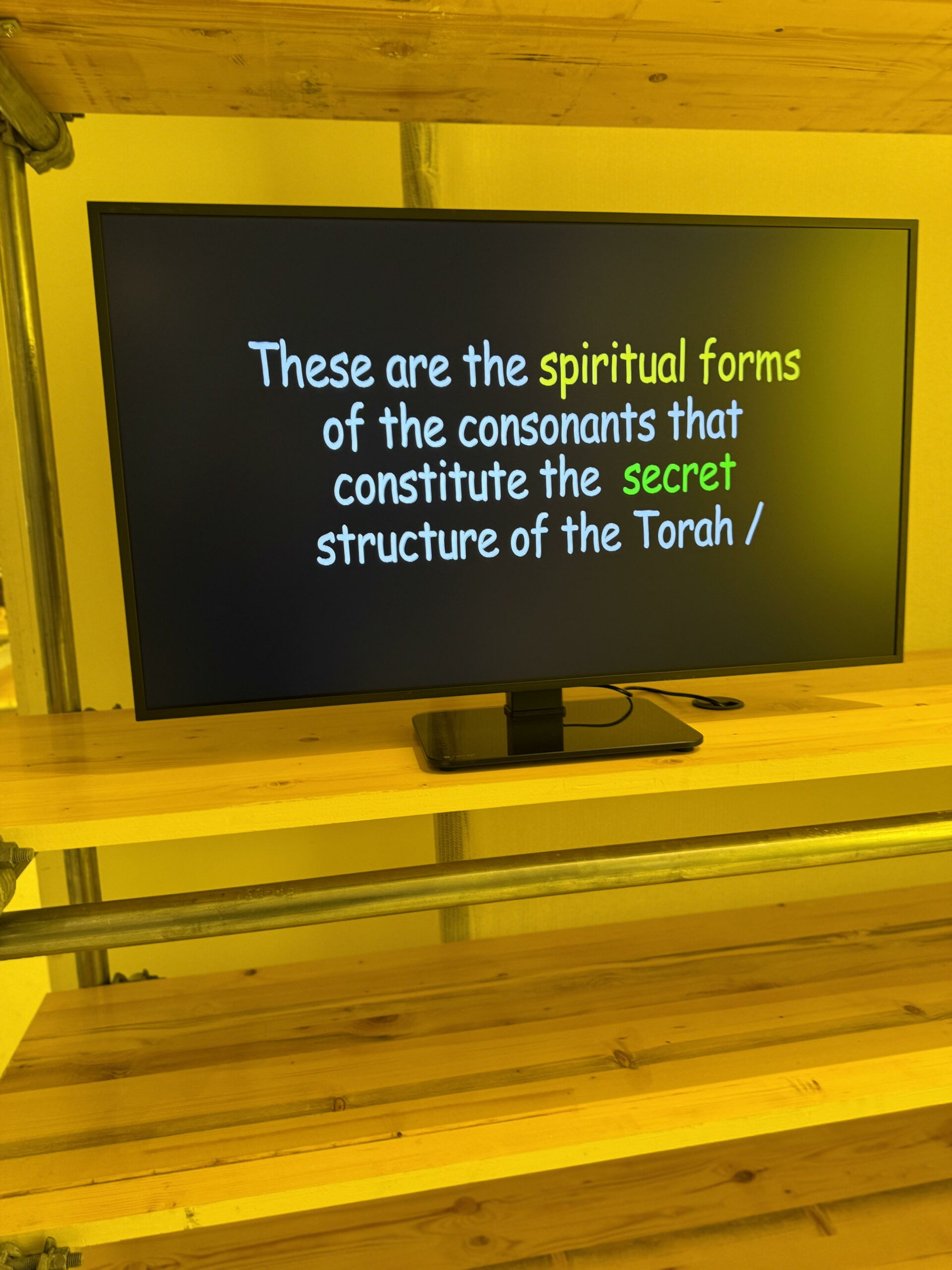
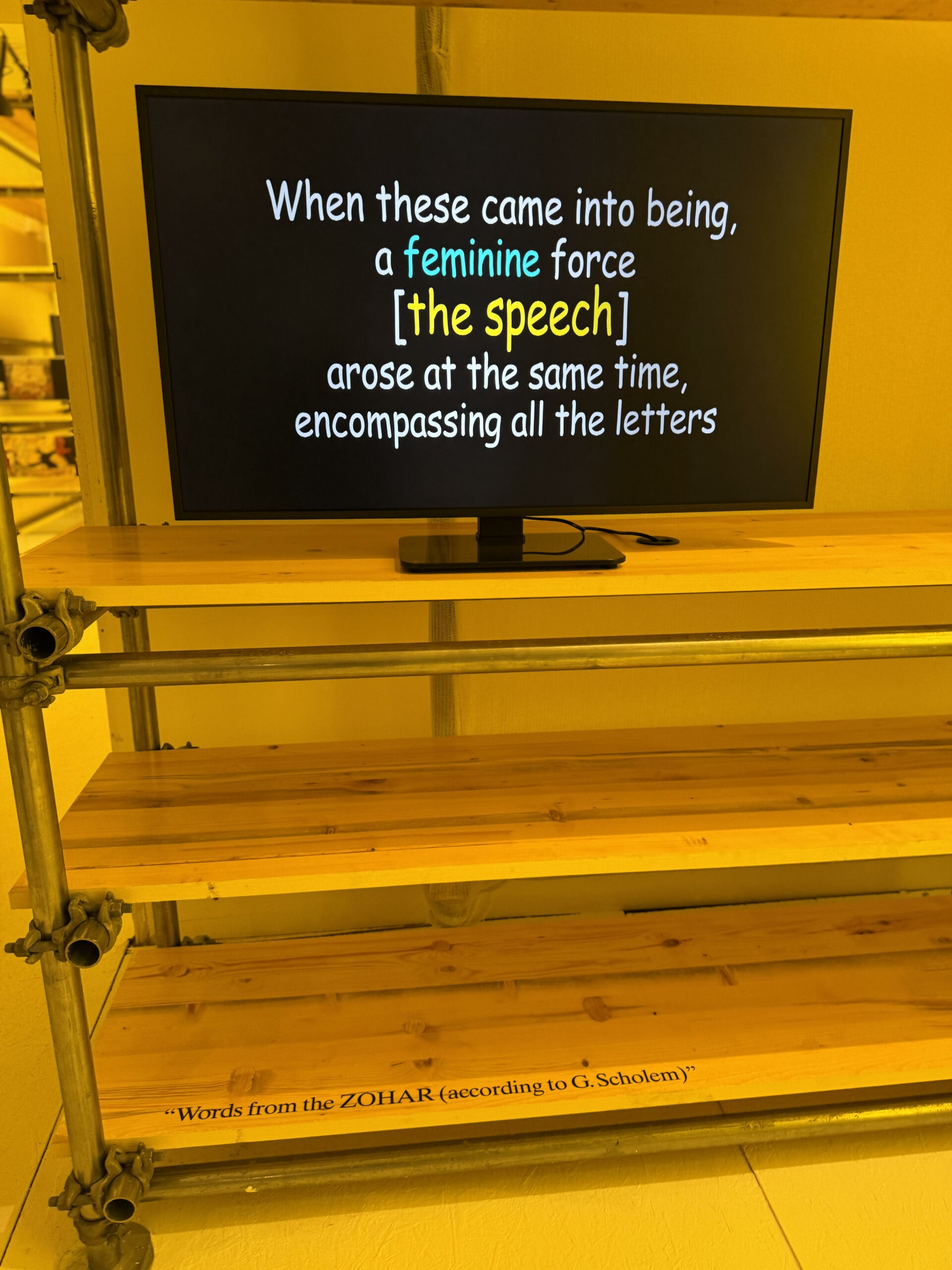
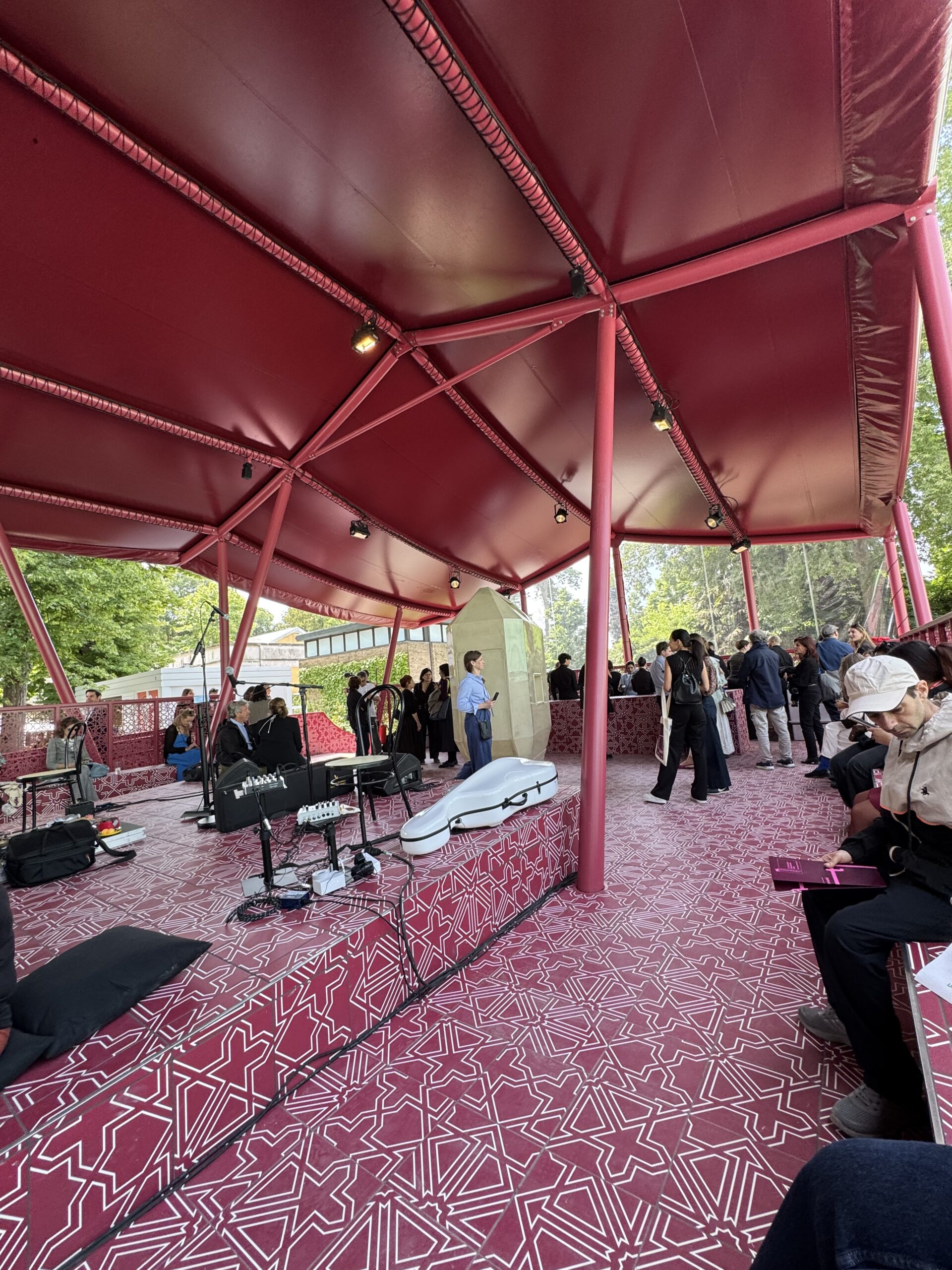
The Qatar Pavilion is the first new pavilion at the Giardini in years. Untitled (A Gathering of Remarkable People) Artist Rikrit Tiravanija, Sophia Almaria, Tarek Atoui, Alia Farid, Hadika is conceived a living pavilion that brings together music, film and food as interconnectedness, cultural practices, unfolding through gatherings that explore hospitality, memory and continuity across the Arab world.
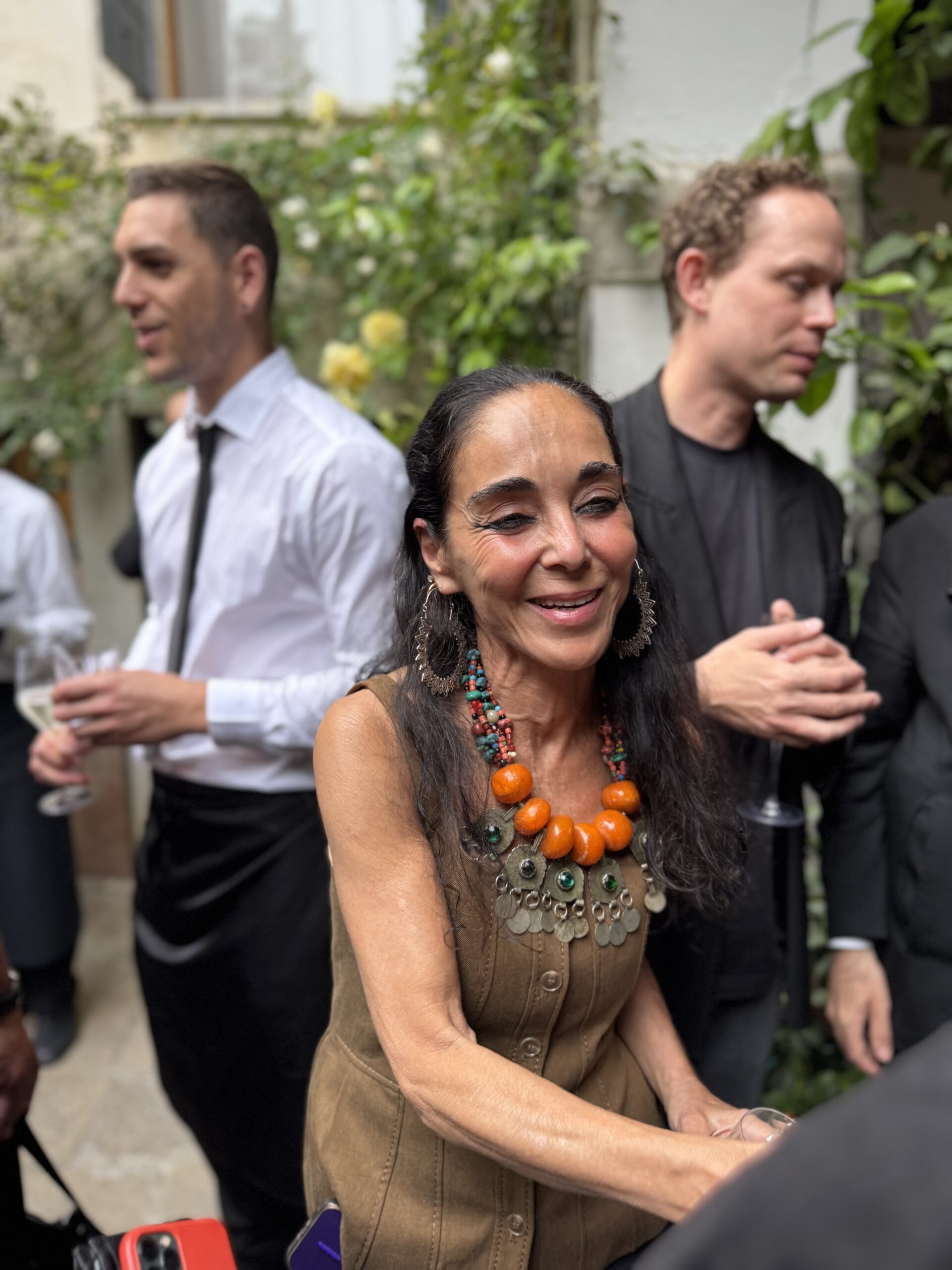
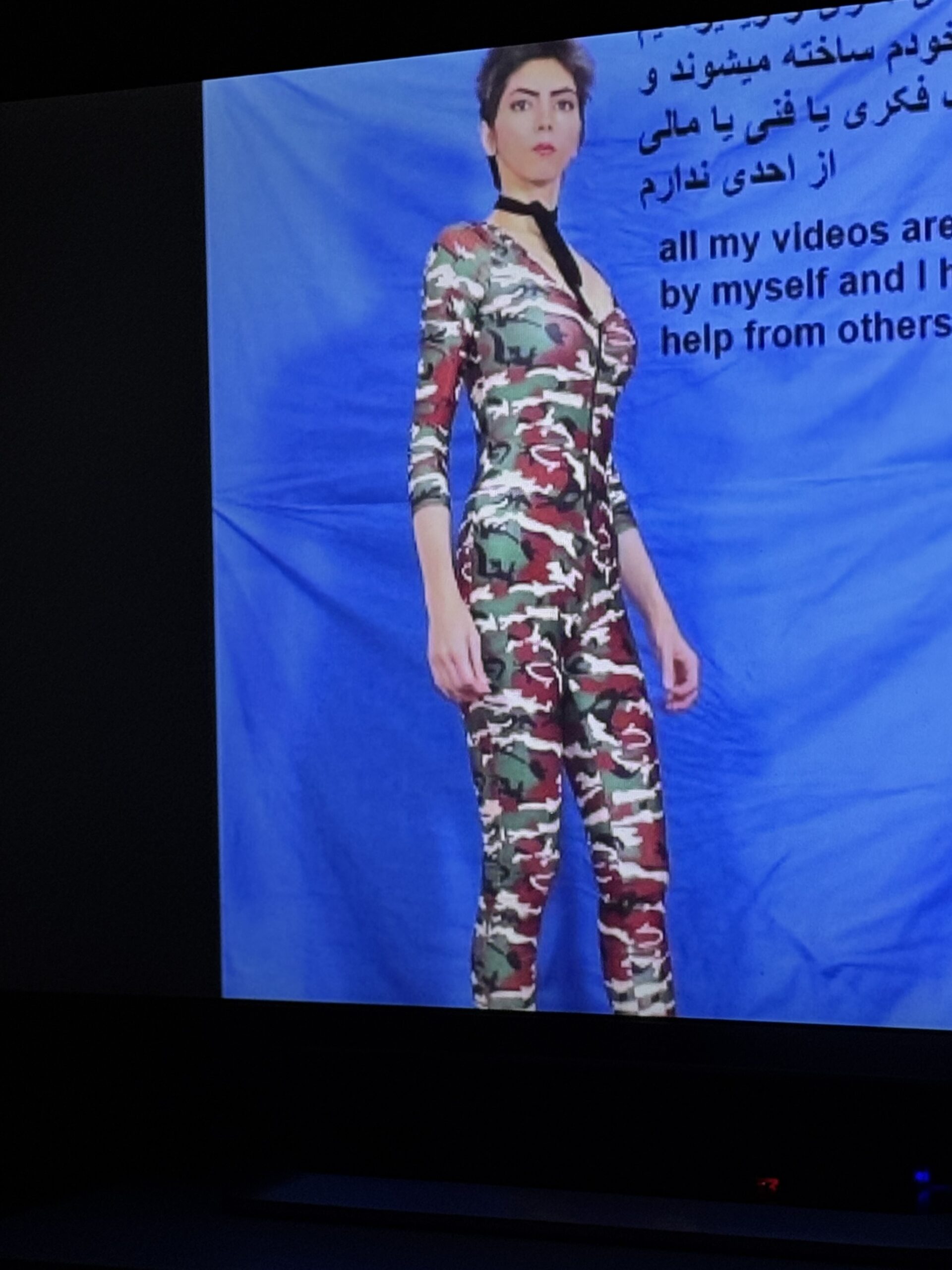
Shirin Neshat, Do U Dare! Palazzo Marin
“My work is never, ever a direct protest, but it is always political.”
Neshat’s new film trilogy, “Do U Dare!” at Palazzo Marin embodies precisely the kind of “minor key” relational Koyo Kouoh is advancing through the Biennale. Neshat’s Do U Dare! does not attempt to resolve exile into identity or fragmentation into coherence. Instead, the inhabits the unstable space between cultures, languages, and histories - precisely the relational condition Koyo Kouoh identifies as the contemporary world of many languages. Her films exemplify how “minor keys” produce emotional depth precisely through fragmentation rather than monumental coherence. They exist in translation, fracture, exile, and layered symbolism. Sound, gesture, ritual, Persian poetics, and cinematic space all operate simultaneously.
The poet Aimee Cesaire from Martinique and Edouard Glissant were influences on Kouoh and reflected in Neshat’s work.
In Poetics of Relation, Glissant opines
“Opacity is not obscurity. Opacity can coexist with every form of exchange. To understand these truly one must focus on the texture of the weave and not on the nature of its components.”
“One who is errant does not abolish the past, or the hidden; she carries them with her.”
Collateral Exhibitions and Foundations
Venice 2026 is unprecedented in the number of extraordinary exhibitions in Fondazione, palazzi, museums and off-site venues. See inter alia MyAtGuideVenice2026, and Judith Benhamou Reports.
Fondazioni Dries Van Noten, Palazzo Pisani Moretta, The Only True Protest is Beauty
Toni Morrison from her conversation with Cornel West:
“At some point in life the world’s beauty becomes enough.”
This was one of my favorite curated exhibitions and not to be missed.
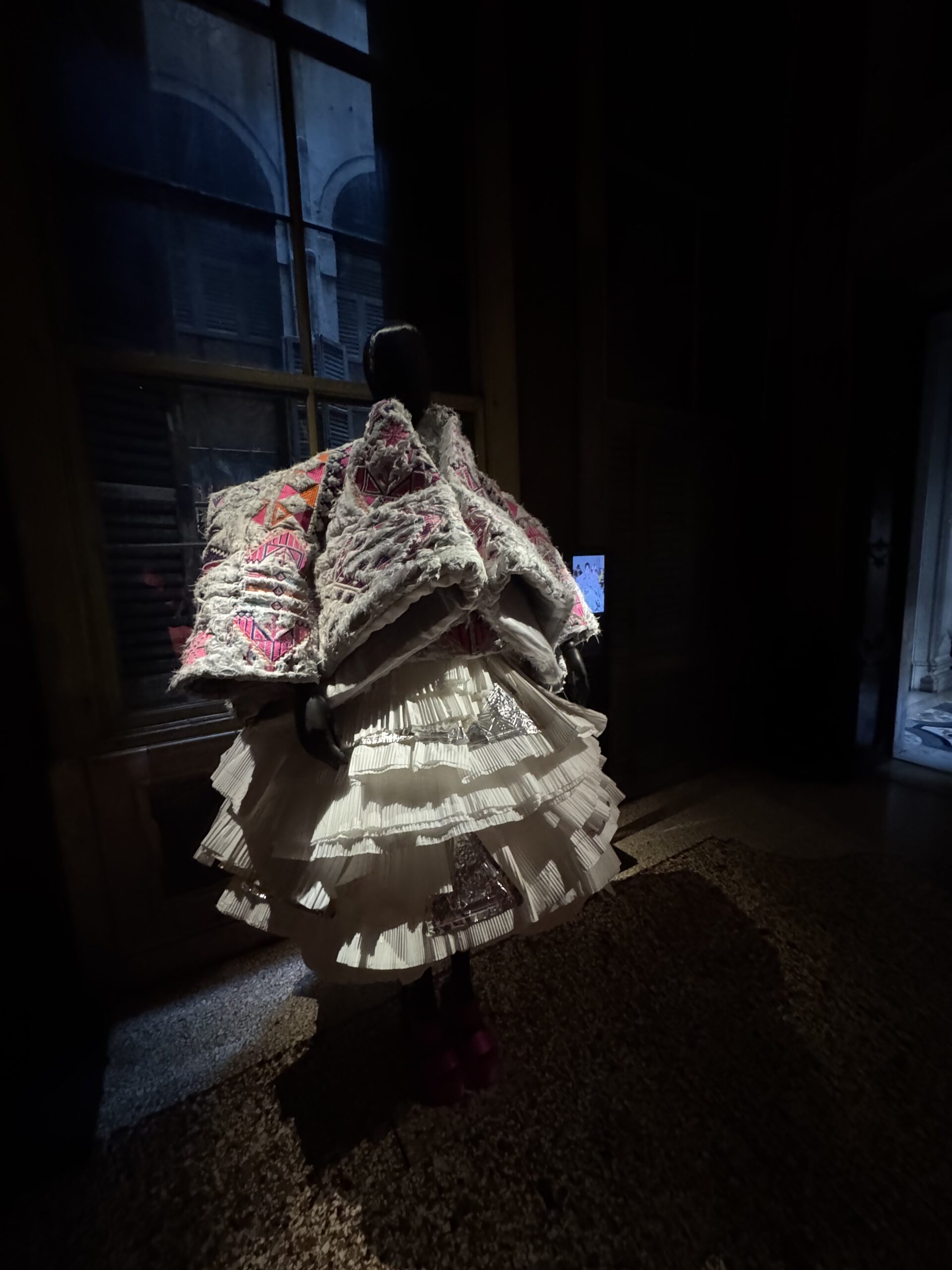
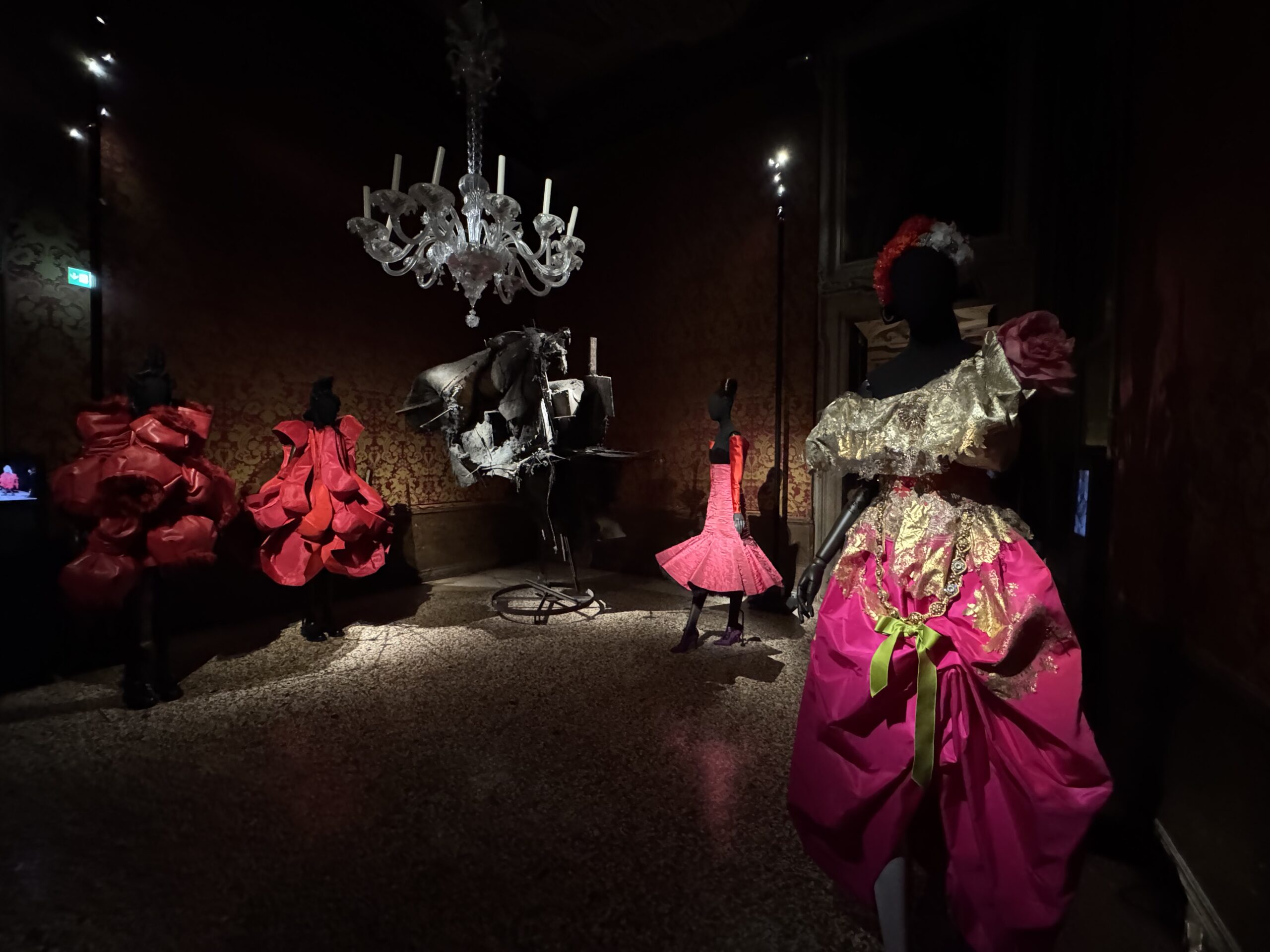
Ayham Hassan is a Palestinian designer who holds fashion shows in Ramallah. He explores the raw poetics of resilience, memory and cultural continuity by reworking Majdalawi Gazan quilted embroidery and printed tulle he creates a "visceral language of high fashion” and resistance.
Punta Della Dogana: Lorna Simpson: Third Person
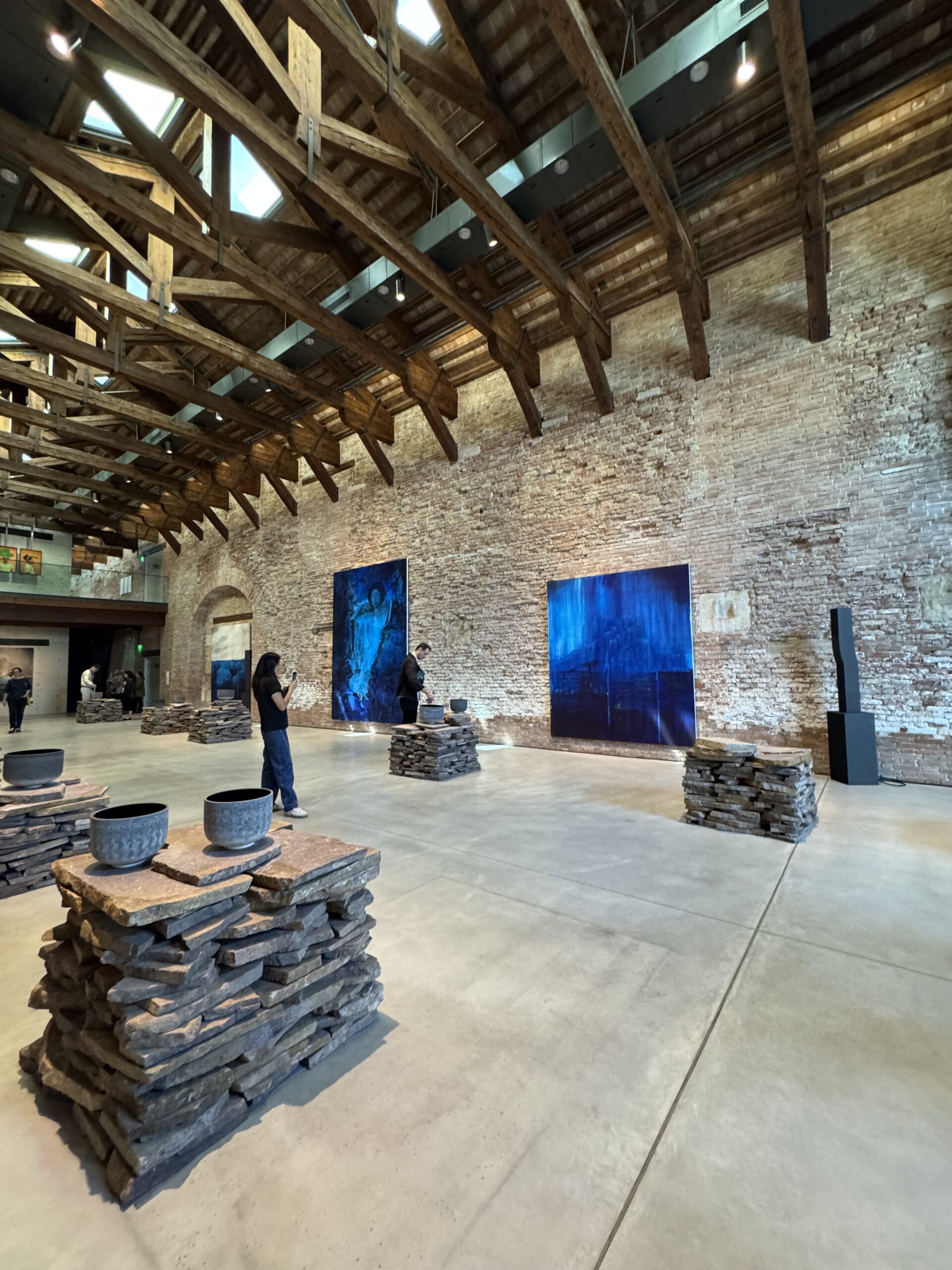
Simpson’s work becomes increasingly spiritual and poetic as she incorporates historical narratives, and natural phenomena. Notice the sound bowls in the exhibition with visitors interacting to create the crystal tones in Minor Keys.
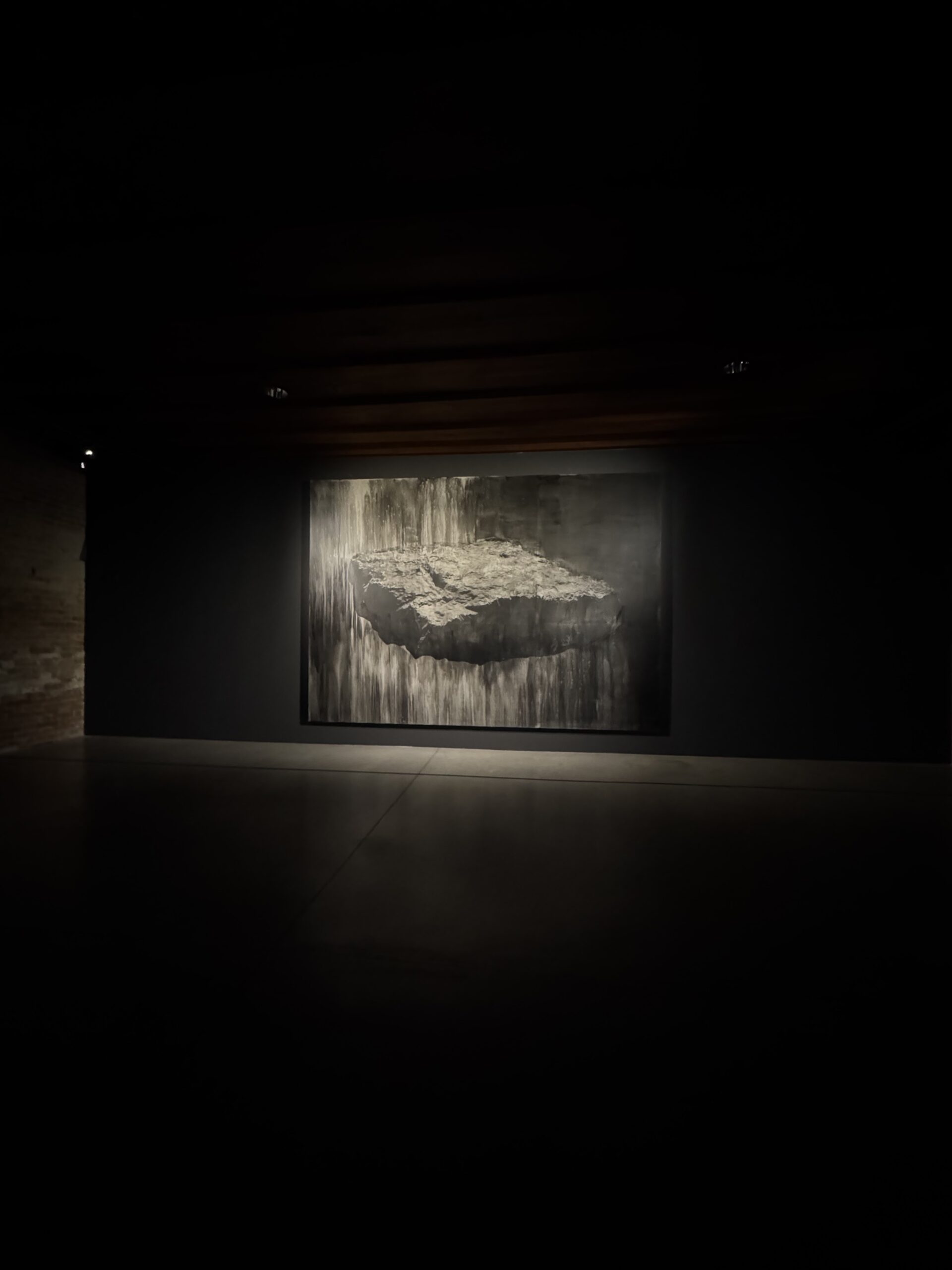
Did Time Elapse is part of Simpson’s recent series of large-scale meteorite paintings.
A Fragmented View of Art, Its Definition and Purpose and the Purpose of the Art Biennale
“Love is an action, never simply a feeling.” Bell Hooks, All about Love
Jason Farago’s praise for Helter Skelter and his criticism of Kuo Kuoh’s In Minor Keys, unintentionally expose the very tensions Kuo’s Biennale seeks to address. The issue is not whether one exhibition possesses greater force or immediacy than another. The issue is whether contemporary art can still be organized through a singular universal framework.
Modernism interpreted Babel as catastrophe: fragmentation, failed communication, the collapse of unity. Museums and biennials often attempted to reverse Babel through universal narratives capable of translating all cultures into one coherent language of art history. But that model increasingly concealed forms of domination beneath claims of universality.
Kouoh proposes another possibility.
In Minor Keys rejects a universal language for art and resists the cultural hierarchies that required dominant western practice to provide intelligibility. Instead, it creates a space of agency, opacity, and incomplete translation. Histories intersect without dissolving into sameness. Works coexist without demanding consensus. The result is not chaos, but relation.
Ironically, Miuccia Prada, President and Director of Fondazione Prada, in her forthcoming introduction to the catalogue implicitly confirms Nancy Spector, embrace of Kuoh’s curatorial practice. “Rather than imposing hierarchies or forced relations between their practices, she simply asked them to present their work together. The result is a dialogue that reveals both their past individual trajectories and their shared present.” Helter Skelter manifests intergenerational accordance and deep mutual respect: a shared worldview shaped by different origins and perspectives. Both artists draw on imagery from popular culture, and, for Jafa, also sound. Each operates within his own social paradigm while remaining fully aware of its defining stereotypes: boundaries they simultaneously utilize and question. Together, Jafa’s and Prince’s distinct yet coherent personal paths become emblematic of a particular historical moment within a specific geographic and cultural context…The result is a portrait of a complex and elusive country, riddled with contradictions and in constant transformation: the United States.
An Art Lawyer’s Perspective: Legal Takeaways from Venice
From an art lawyer’s perspective, it is not surprising that with this Babel of what is defined as “art” and recent events of 2026, potentially raising issues of restitution claims, nonprofit governance obligations, AI copyright questions, sanctions law, cultural diplomacy, moral rights, donor restrictions, and free expression principles challenging legal issues are raised. These developments are especially significant because Venice increasingly operates at the intersection of multiple overlapping legal systems: domestic, administrative, international and national, depending on choice of law principles.
The Biennale underscores that legal title alone may no longer resolve issues surrounding reproduction, display, digitization, or cultural legitimacy.
For several years now, NFT’s, AI, money laundering regulations and international treaties dealing with repatriation, traditional knowledge and indigenous rights have expanded the practice of art law. Venice 2026 confirmed how rapidly the legal framework surrounding contemporary art is evolving beyond traditional notions of ownership and authorship. Many works incorporated archives, oral histories, indigenous materials, ritual practices, and collective cultural memory, raising increasingly complex questions concerning copyright, moral rights, trademark and rights of publicity, cultural patrimony, and communal stewardship.
Other works of art incorporated plant material, minerals, birds and feathers implicating international treaties involving endangered species. Provenance continues to be a key concern particularly as it may involve artifacts and other materials and antiquities with a provenance of find or export date from the country of origin after 1970, the date of the UNESCO convention on cultural property.
There is no universal body of Art Law. The global art world involves complex transnational border issues and complex questions of international law and conflict of laws as there is no single state law that governs private contracts applies to contracts and international treaties must be adopted by sovereign states.
The Biennale ultimately suggests that our practice as art lawyers is less in enforcing singular universal standards and more in negotiating multiple overlapping systems of legal and cultural authority. In a global art world increasingly shaped by plurality rather than universality, the art lawyer, too, must list first to our clients, then to the other voices, pay attention to the currents, and provide the information to our clients that helps them navigate the shoals and currents of the art world and sail with the tides.
Not an End but a Beginning
Carrie Mae Weems introduced the practice of convening to the art world. This Venice 2026 carries forward that practice. It raises many questions to suggest a new way forward for art and artists, beyond the art market and the object and exhibition making - beyond spectacle.
Minor Keys at the final analysis is a call for poetry as power to change the current state of the world and art which is not mere object but reaches the soul. It calls for an aesthetic of listening to artists’ voices and their art created from alternative histories to find the shared commonalties and yes, to change the consciousness of the spectacle.
Influenced, by Aimee Cesaire and Edouard Glissant, Kouoh’s Biennale project is about changing the way the art world thinks, acts and defines what is art, through listening and relationships.
What forms that will take and what value the art market places on this new vision is unclear. As this article posts, I received from the VIP desk at Art Basel, Qatar, an announcement of the curator and the theme of the Art Basel exhibition. Sounding a lot like the Biennale, it requests galleries to present solo artists who speak to the theme. Venice Biennale on sale.
The theme, between / بين, explores the condition of being "between" as a generative space one that remains open and refuses a singular definition. Rather than arriving at fixed positions, between / بين dwells in relation, holding open a space for encounter, exchange, and fluidity, asking what becomes possible when the "between" is not a gap to be closed, but a place to inhabit.
“A civilization that proves incapable of solving the problems it creates is a decadent civilization.”
— Discourse on Colonialism by Aimee Cesaire
Recommended articles
Author

Barbara Hoffman
Barbara T. Hoffman is recognized internationally and nationally as one of the preeminent art, intellectual property, and cultural heritage lawyers. With more than forty years of practice in every aspect of the field, Hoffman has been acknowledged by her peers with leadership positions in the New York City Bar Association and International Bar Association, elected to Super Lawyers, Best Lawyers...