Collecting Without Borders: Why International Artists Deserve a Closer Look
Nov 23, 2026
As collectors prepare for Miami Art Week, one of the art world's most anticipated gatherings, the opportunity to discover extraordinary work extends far beyond familiar names and established markets.
For collectors, collecting international art is about more than expanding a collection's geographical reach. It presents an opportunity to engage with different cultural perspectives, discover artists whose work may be underrepresented in the American market, and build collections that reflect a more nuanced understanding of contemporary art.
Yet international visibility and artistic significance do not always move in tandem. An artist may have a respected practice in one country while remaining relatively unknown in another.
So what should collectors look for when discovering international artists, and how can they approach unfamiliar markets with confidence?
Why Collecting International Art Deserves Greater Attention
The international art market has traditionally gravitated toward influential centres such as New York, London and Paris. While these cities remain central to the commercial art world, artistic discovery is no longer confined to their galleries and institutions.
Collectors are increasingly exposed to practices emerging from Canada, Latin America, Africa, Asia and the Middle East, encountering artists whose work reflects distinct cultural histories and contemporary experiences. A recent Artsy feature exploring what leading collectors are watching in 2026 highlights this expansive outlook, with collectors expressing interest in artists, exhibitions and artistic movements across a growing range of international centres.
For discerning collectors, this presents an important opportunity. Artistic merit does not necessarily correspond with commercial recognition, particularly when an artist is entering a market where their work has not yet received widespread exposure.
An established artist in Toronto or Bogotá may be relatively unfamiliar to collectors in New York or Miami, despite years of exhibitions, critical engagement and artistic development. Looking beyond geographical familiarity allows collectors to evaluate the work itself, rather than relying exclusively on market visibility.
How Galleries Introduce International Artists to New Markets
For international artists, entering the American art market can represent an important turning point. Gallery representation creates opportunities to reach new collectors, develop relationships with curators and participate in exhibitions that broaden the context in which their work is understood.
Consider a Canadian artist represented by a U.S. gallery. While Canada and the United States share considerable cultural and commercial connections, their collecting communities, gallery networks and institutional relationships remain distinct. American representation can introduce an artist to collectors who may have limited familiarity with the Canadian contemporary art scene.
For collectors, the gallery serves as more than a point of purchase. A knowledgeable dealer can explain the artist's practice, provide exhibition history, discuss the evolution of a body of work and offer insights into its wider artistic significance.
However, representation alone should never determine an acquisition. Collectors should consider the strength and consistency of the artist's work, the gallery's commitment to their career and the broader context in which their practice has developed.
The most meaningful gallery relationships encourage informed collecting rather than simply promoting commercial recognition.
The Value of Discovering Artists Beyond Familiar Markets
What makes international collecting particularly rewarding is the possibility of encountering perspectives that challenge established tastes. Artists working in different cultural environments may approach universal themes such as identity, memory, landscape and belonging through markedly different visual languages.
These distinctions cannot be explained by nationality alone. They emerge from personal histories, artistic influences, education and the social environments in which artists develop their practices. For collectors, bringing these perspectives together can create unexpected relationships within a collection.
A contemporary photograph acquired in Berlin might establish a compelling dialogue with a painting from Montreal or a sculptural work from Mexico City. The connection may be conceptual, visual or entirely personal.
This spirit of discovery remains fundamental to international art fairs. The lesson for collectors is that meaningful discoveries often require stepping away from the most recognizable names. A collection becomes more compelling when its acquisitions reflect independent curiosity rather than market consensus alone.
Why Today's Collectors Are Researching More Before Buying
While opportunities for artistic discovery have expanded, collectors are demonstrating greater selectivity. According to the Art Basel and UBS Survey of Global Collecting 2026, 72% of surveyed high-net-worth collectors conducted moderate or significant independent research before purchasing art, up from 62% in 2025.
Meanwhile, the proportion who reported acquiring work by a newly discovered artist declined from 66% in the previous survey to 45%. These findings reveal an important distinction: greater access to art does not automatically translate into a greater willingness to acquire unfamiliar work.
For collectors considering international artists, research can help bridge that gap. Exhibition histories, critical writing, institutional involvement and gallery relationships provide valuable context for understanding an artist's development. Conversations with dealers and curators can also reveal how a practice fits within broader artistic movements.
As One Art Nation explored in The Habits of Successful Collectors, informed acquisitions balance personal conviction with thoughtful research and professional guidance.
The objective is not simply to identify an artist before their market develops. It is to understand the artistic significance of the work and why it deserves a place within a collection.
Miami Art Week: A Gateway to International Art
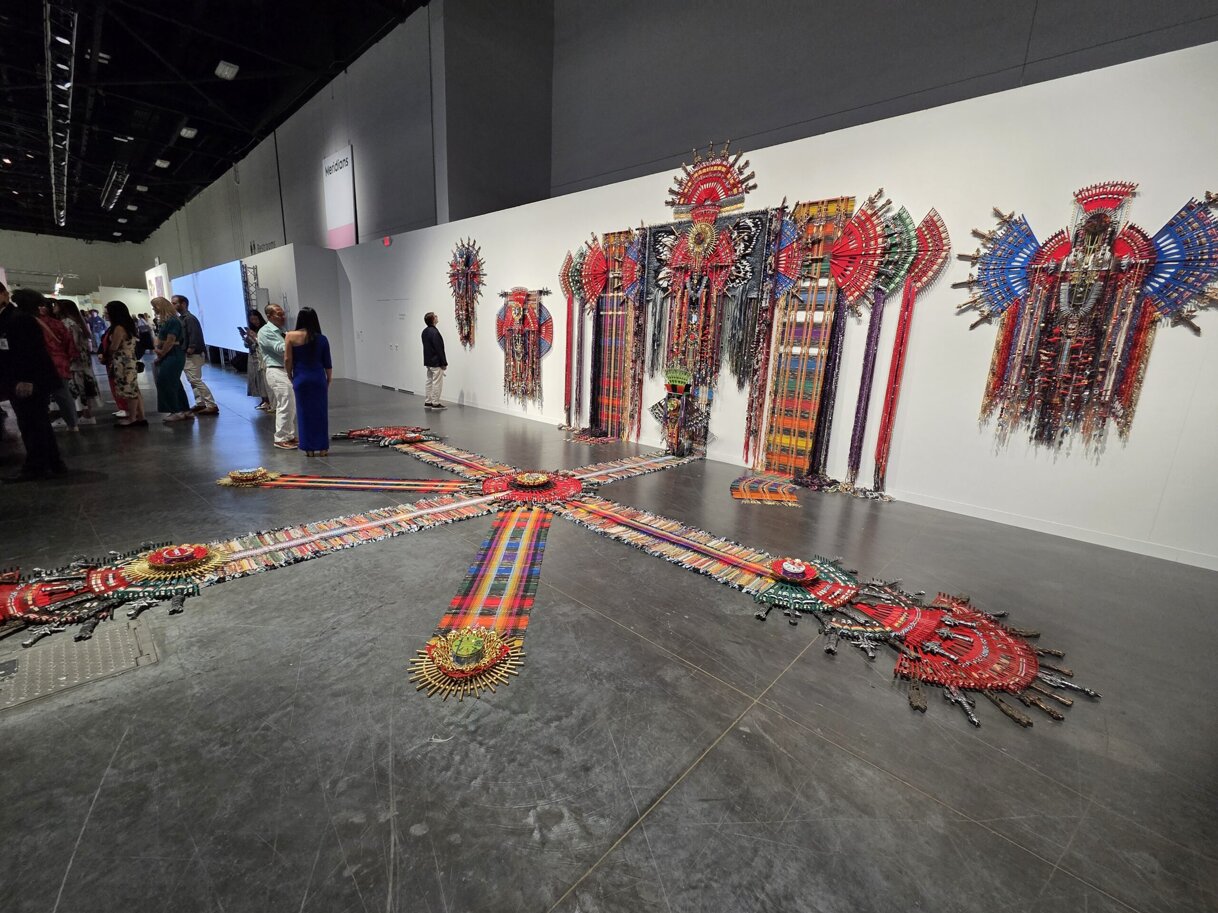
Few art events illustrate the possibilities of cross-border collecting as clearly as Miami Art Week. Miami's connections to North America, Latin America, the Caribbean and Europe have helped establish the city as an important meeting point for artists, galleries and collectors.
Beyond the major fairs, new initiatives are creating opportunities for international artists to develop a more sustained American presence. One example is DC Lab, a contemporary art space established by Colombian collectors Cristina Chacón and Diego Uribe. As reported by The Art Newspaper, the initiative will provide exhibition opportunities for international galleries without a permanent Miami presence, alongside research and public programming.
Such projects underscore an important development: international collecting is not simply about acquiring works from abroad. It can also contribute to the visibility of artists, the exchange of ideas and the development of meaningful cultural relationships.
For collectors attending Miami, the greatest opportunities may lie in conversations with unfamiliar galleries and encounters with artists whose practices warrant a closer look.
Buying Art Internationally: What Collectors Should Know
Discovering an international artist is one thing; acquiring the work is another. Although cross-border transactions can introduce additional considerations, experienced galleries and art advisors can help collectors navigate the process. Before committing to an international acquisition, collectors should establish several essential details:
- Provenance and authenticity: Confirm the artwork's ownership history, documentation and authenticity, including any relevant certificates.
- Gallery representation: Understand the gallery's relationship with the artist and whether it will provide ongoing support and information.
- Shipping and insurance: Clarify who will arrange professional transportation, what insurance covers and when responsibility for the artwork transfers.
- Taxes, tariffs and customs: Establish whether the artwork is already in the destination country and what import requirements or applicable charges may arise.
- Total acquisition cost: Request a clear breakdown of the purchase price, currency, shipping, insurance and any additional fees.
These considerations are particularly important when purchasing artwork at an American fair that may subsequently be shipped from another country. For a closer examination of the regulatory landscape, One Art Nation previously explored how tariffs are reshaping the global art market.
With clear documentation and experienced professional guidance, international acquisitions can become a natural extension of a thoughtful collecting practice.
The Future of Collecting Without Borders
As international art fairs continue to bring diverse artistic practices into closer conversation, collectors have an opportunity to reconsider how they discover and evaluate art.
The most compelling collections are not necessarily those assembled from the most prominent galleries or established markets. They are built through curiosity, discernment and a willingness to encounter perspectives that challenge familiar assumptions.
For collectors visiting Miami Art Week, that may mean spending more time with an unfamiliar artist, asking deeper questions about their practice or exploring a gallery whose programme extends beyond traditional collecting centres. Geography can provide valuable context, but it should never define the limits of artistic interest.
Ultimately, collecting without borders is less about where an artwork comes from and more about what it brings to a collection. The most meaningful acquisition may be the one that introduces an entirely new way of seeing.
Recommended articles



Recommended Videos
Charlie Manzo, Alaina Simone, Muys Snijders, Kyle McGrath, Caren Petersen, Jason Rulnick, Elysian McNiff Koglmeier, Bianca Cutait, Linda Mariano, Jack Mur