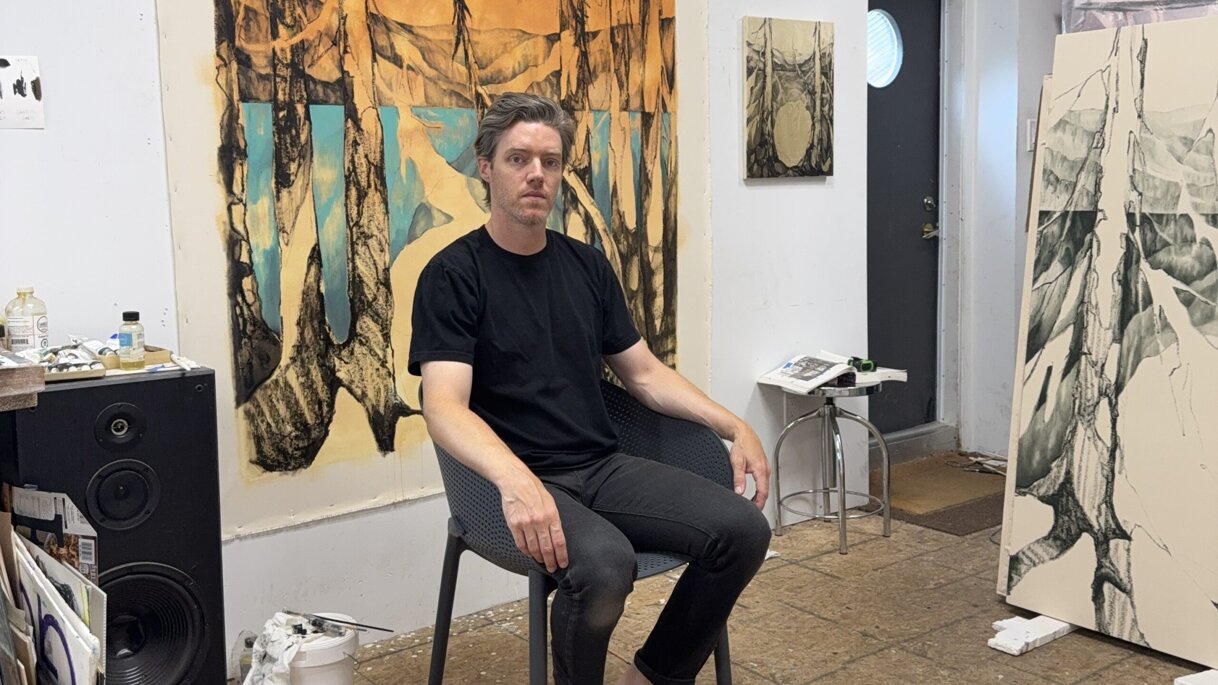
5 Questions with Toronto-Based Artist Shawn Evans
Nov 23, 2026
What happens when colour and abstraction come together to create something that is both visually captivating and open to interpretation? For Toronto-based artist Shawn Evans, painting is an exploration of ideas, influences and emotions that invite viewers to look a little closer.
After seeing his works in person, we wanted to get to know the artist behind the canvas, exploring the inspirations and unexpected influences that shape Shawn’s creative practice, the stories woven into his distinctive visual language, and what he hopes collectors will discover in his work.
We also look ahead to an exciting milestone: Shawn's first exhibition in the United States. With international art sales facing an increasingly complicated landscape of tariffs, trade regulations and cross-border considerations, we discuss what this means for Canadian artists entering the U.S. market. Does today's political climate create new barriers for artists and collectors?
From artistic inspiration to the practical realities of collecting internationally, this is a conversation about creativity, opportunity and the evolving business of art.
1AN: Which artists, movements, or unexpected influences have had the greatest impact on your work? Are there inspirations outside the art world that continually find their way into your practice?
Shawn Evans: This is the first time that I’ve really dug into the work of Tom Thomson and the Group of Seven. They just weren’t a part of my art upbringing. Saskatchewan landscape painting was, and it has weighed heavily on me as a painter.
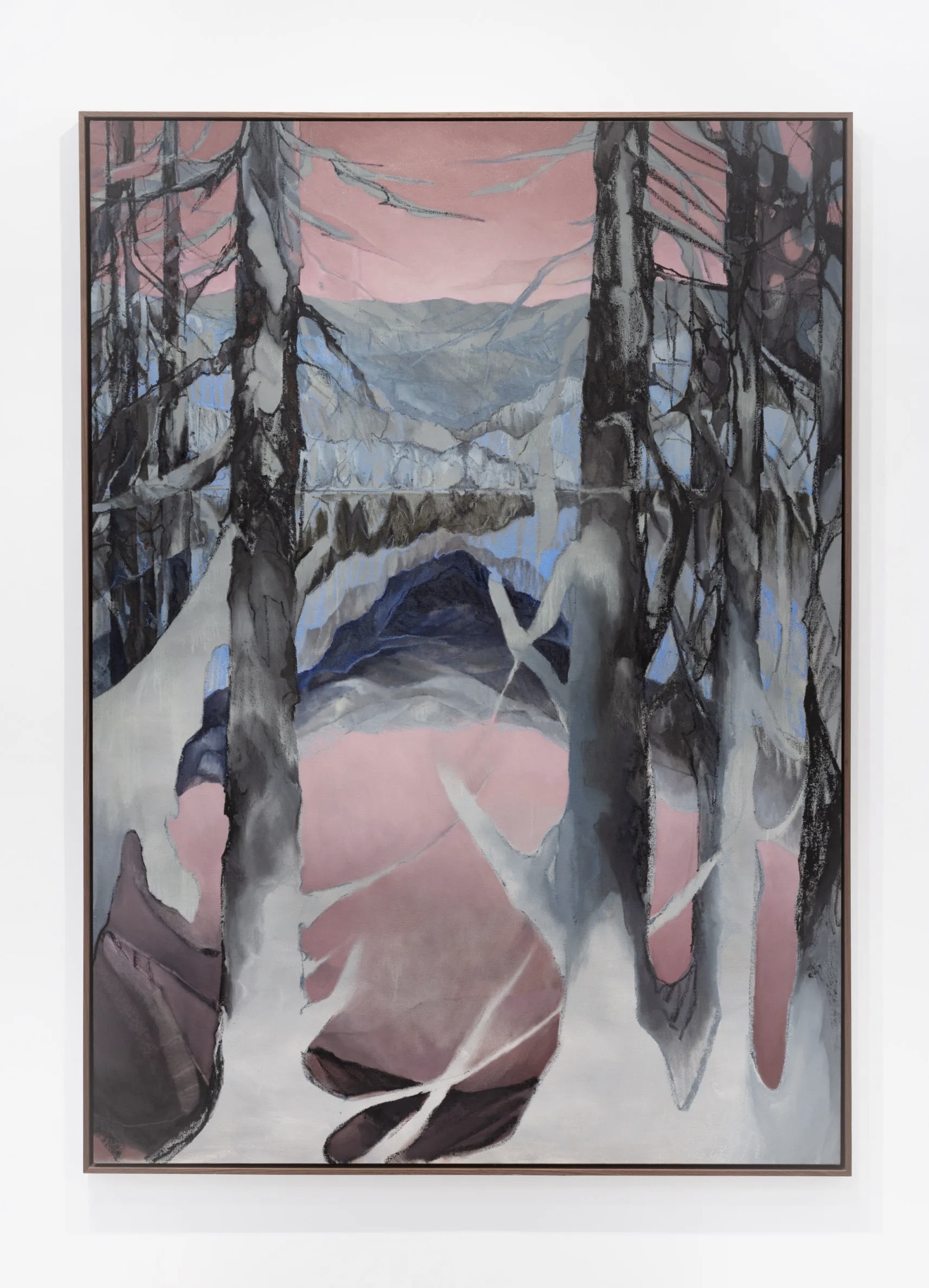
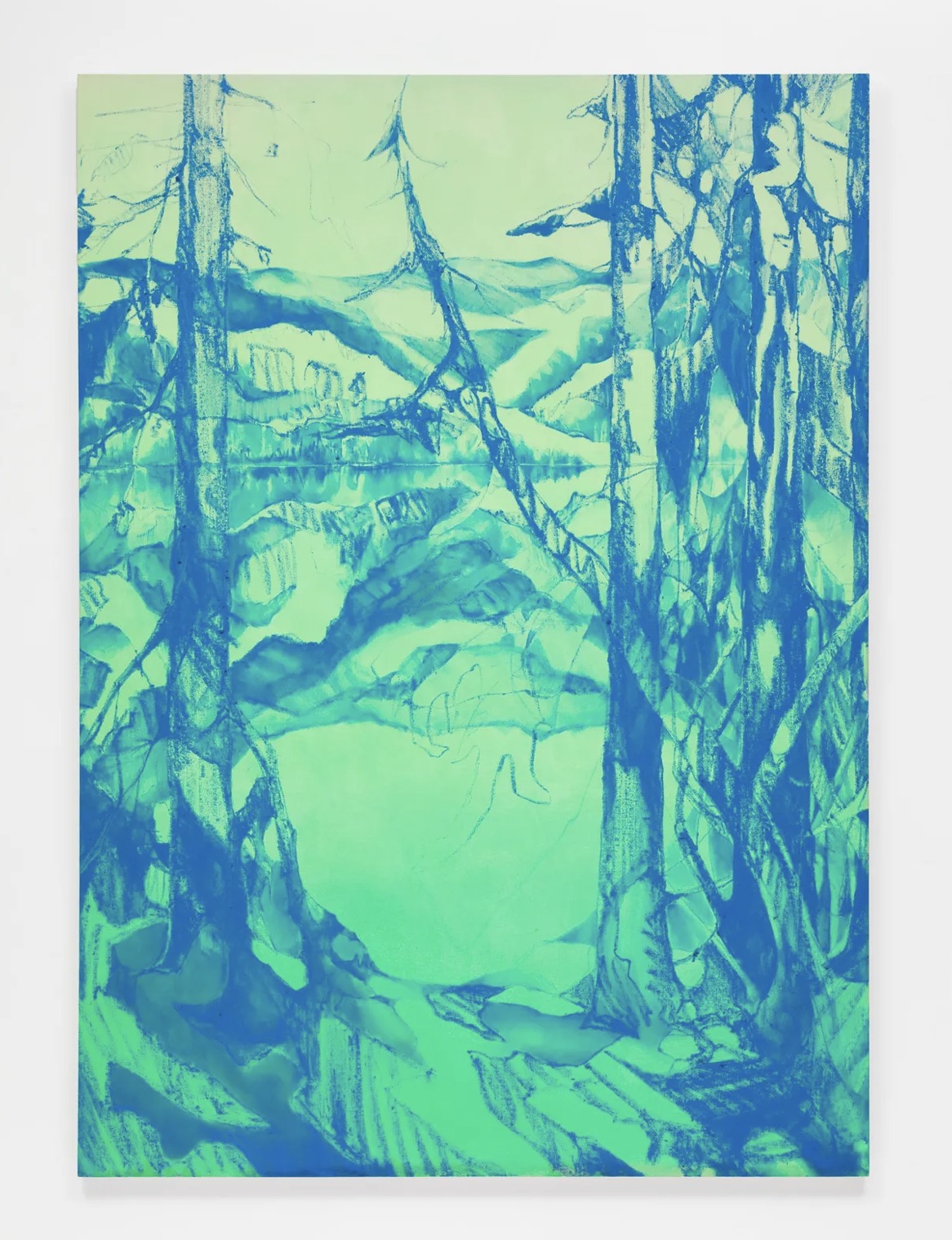
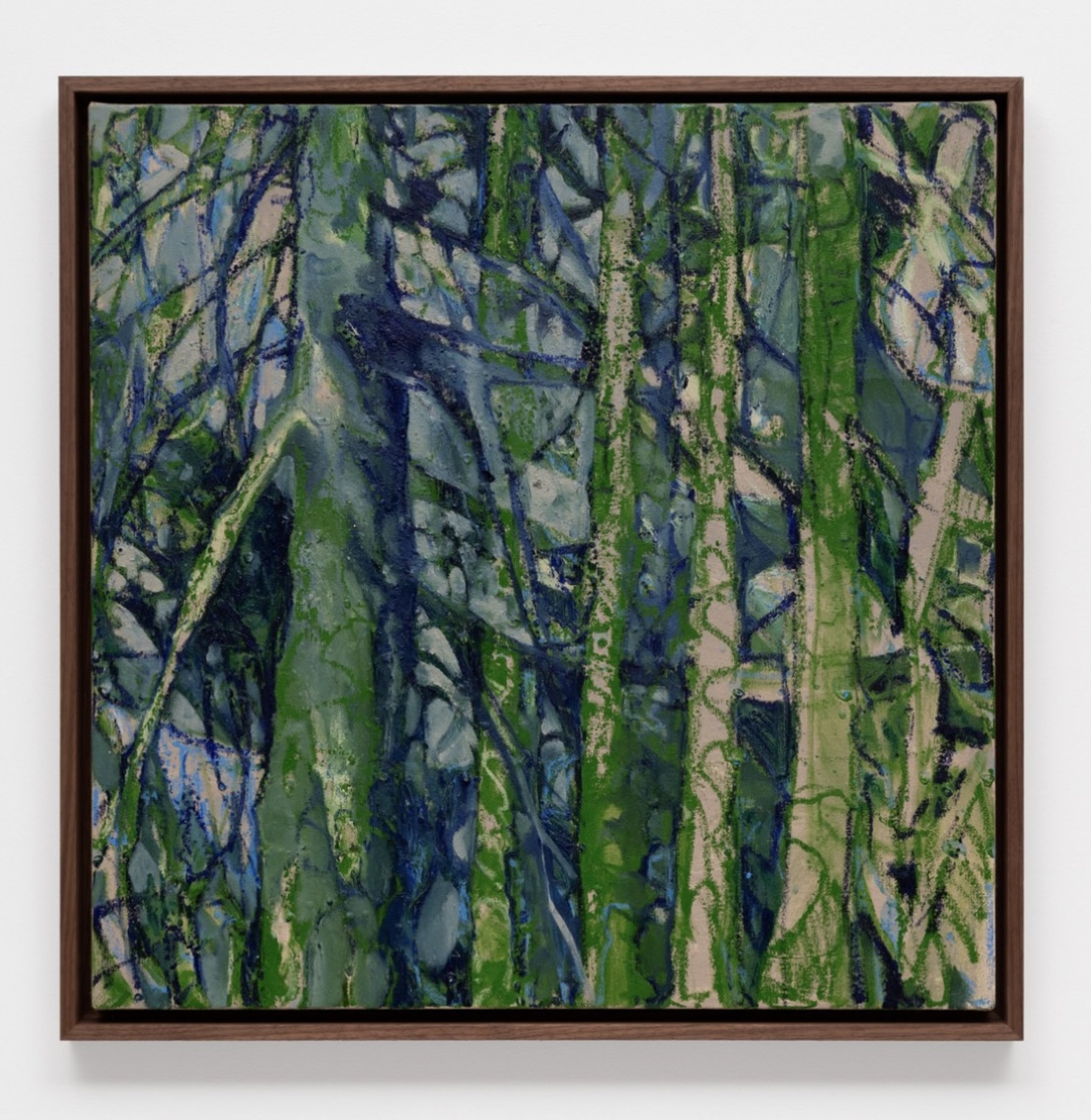
The Saskatchewan influence is most evident in the prominent horizon line in each painting, which has become such an important part of this series—it certainly was not in the original photograph reference material, and it wasn’t a major aspect in the Group of Seven paintings. But painting landscapes in Ontario also meant reckoning with the history of landscape painting here. I was trying to find a way to bring those two traditions together, and that’s when the trees started finding their way into my work.
Trees are also a big source of inspiration for me, again largely because of where I grew up. In southern Saskatchewan, most trees are planted, which gives them a particular sense of meaning and purpose and scarcity. Combining the linear break of land and sky with trees obscuring the view and consuming the foreground brings a sense of playfulness in imagining where this place might be or what exactly it is that I’m painting.
1AN: I have actually found myself standing in front of one of your pieces and wondering where the scene is from! Maybe because your paintings have a distinctive visual language, with an intriguing interplay of colour, texture, atmosphere and abstraction. For collectors discovering your work for the first time, what would you like them to understand about the ideas, experiences or emotions that inform your artistic practice? Is there something in your work that might not be immediately apparent at first glance?
Shawn Evans: I use the landscape not just as a subject, but as a way to explore bigger questions about perception, memory, meaning, and art history.
The smaller 16”x20” horizontal paintings are a part of a series called Quantum Sky. The series began with a single photograph I took while at the Banff Centre. I kept returning to that same image in the studio, painting it again and again while also looking at historical landscape paintings in books and online.
The title comes from quantum computing, where the computer will hold all the possible solutions at once to arrive at the answer. In a way, that mirrors what I’m doing in the studio. By returning to the same image over and over, I'm exploring different possibilities, trying to figure out what it is I'm looking for in a painting. It's also part of a larger question I'm working through: what does it mean to make landscape paintings today, particularly within the history of Canadian art?
1AN: Well, and being a Canadian artist, your upcoming first exhibition in the US represents an exciting milestone. You're entering the U.S. market at a particularly complicated time for cross-border trade and cultural exchange. Recent U.S. tariff measures have raised concerns about the costs of importing Canadian-produced artwork, with some categories of original art potentially facing significant additional duties. How are you preparing for these challenges?
Shawn Evans: The day after Rukaj Gallery and I spoke about our New York show, a 50% tariff on Canadian art was announced. So the timing certainly isn’t ideal. But I think the long-term goals for both myself and the gallery outweigh the challenges we’re facing in the short term. And who knows? These policies could change on a whim.
On a more positive political note, PM Mark Carney recently proposed making the first $45,000 of qualifying artistic income tax-free. That could make a real difference for working artists in Canada, and it's encouraging to see some recognition of the challenges artists face in making a living from their work.
1AN: Totally agree! It will be refreshing to see practical support that puts money directly back into the pockets of working artists. But do you worry that the current political climate could influence American collectors' willingness or ability to purchase work by Canadian artists?
Shawn Evans: I believe art fundamentally transcends politics and its policies of a particular moment. When someone truly engages with a work, the relationship is entirely one-to-one. People fundamentally engage with what resonates with them on a personal level that bypasses borders and nationality; this matters so much more than where a work is made. If an American collector finds themselves uniquely paired with a Canadian artist's work, it is because they recognize a shared truth in it. That connection is far more enduring than any temporary political climate.
1AN: Agreed. That personal resonance is exactly what makes art timeless; it speaks to our shared humanity long after the politics of the day have changed. So, for collectors considering purchasing artwork from an artist based in another country, what practical considerations should they be aware of beyond the purchase price? What advice would you give an American collector who loves the work of a Canadian artist but has never purchased artwork internationally? What should they ask before committing to a purchase?
Shawn Evans: I am reminded of seeing Steve Martin at Contemporary Calgary, where he spoke passionately about his collecting of Lawren Harris. He said something to the extent of how surprising it was to discover an artist, virtually unknown to him as an American, yet so established in Canada, and then again perplexed about how accessible the work was to collect. I think those kinds of opportunities exist everywhere in the Canadian market. There are so many early-, mid-, and late-career artists who are working full-time in their studios, whose work is collected by top-tier collectors, collections, museums, and institutions. Enduring as an artist is the whole game, and these structures will not only continue to support those artists but will also give their work a platform for decades to come. There is some certainty there, and it’s only a matter of time before more of it gets the international attention it deserves. As Steve Martin says so well, “be so good they can’t ignore you.”
1AN: Thanks for taking the time to chat with us, Shawn. Whether you’re blending prairie horizons with Ontario trees or taking on cross-border tariffs in stride, you prove that great art always finds a way to connect.
Connect with Shawn here.
Recommended articles

Recommended Videos
Charlie Manzo, Alaina Simone, Muys Snijders, Kyle McGrath, Caren Petersen, Jason Rulnick, Elysian McNiff Koglmeier, Bianca Cutait, Linda Mariano, Jack Mur
Madelaine D'Angelo, Thomas Galbraith, Michael Phillips Moskowitz